3 hr
Húsavík Family-Run Whale Watching Cruise in Skjálfandi Bay
- Entry ticket
- Mobile voucher
- Valid same day
- Free cancellation
Húsavík Whale Watching Rib Boat — Skjálfandi Bay Speedboat Trips
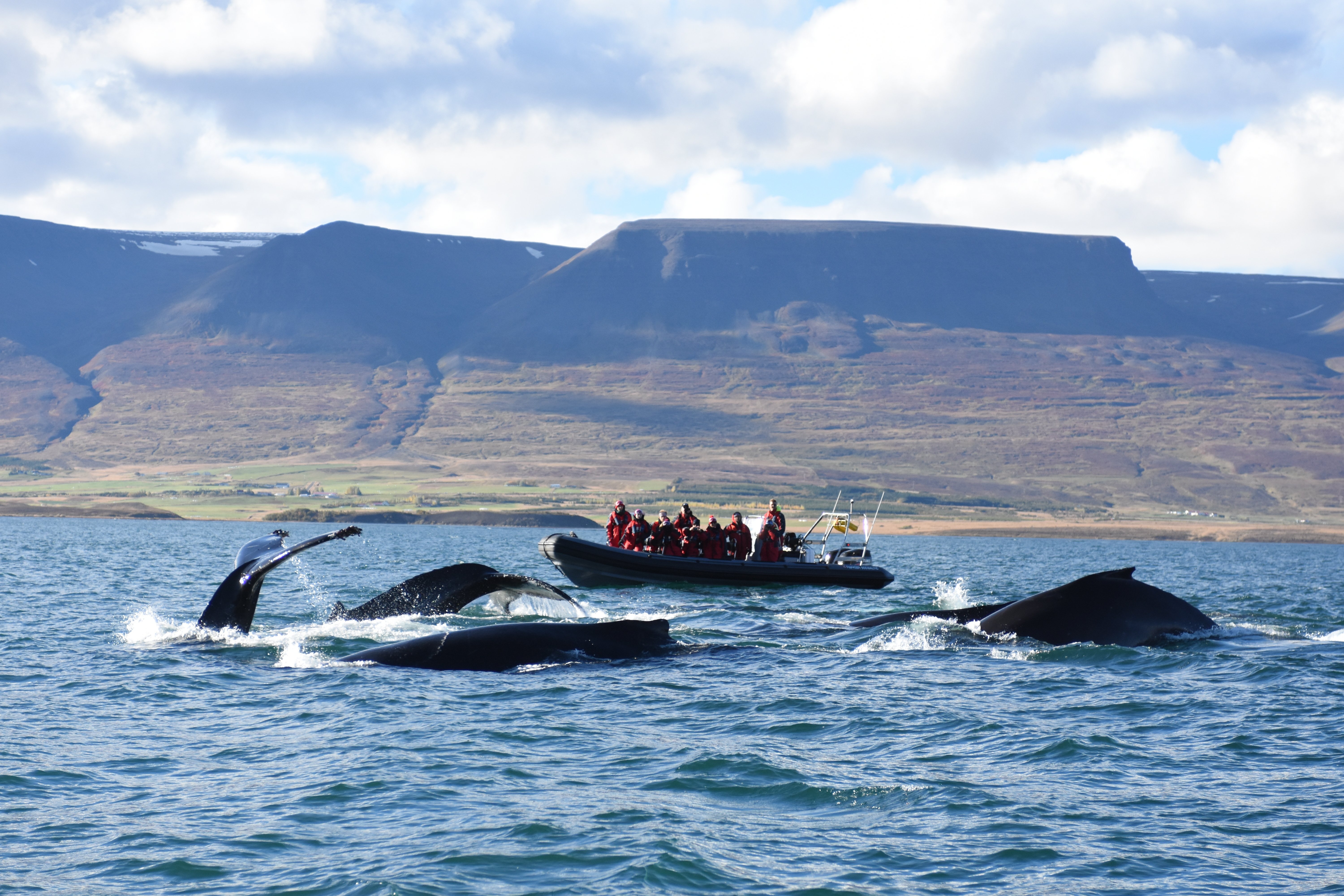
Cold spray on the bow, humpbacks rising close.
Compare fares, pick the fit — all bookings are mobile-voucher and eligible for free cancellation where shown.
3 hr
3 hr
3 hr
Booking your husavik whale watching rib boat tickets in advance is highly recommended to secure your preferred departure time from Húsavík. Visitors must decide between the iconic oak vessels or a faster, more agile boat type.
| GG1 Whale Watching Traditional Oak Boat |
Top pick GG2 Big Whale Safari & Puffins RIB Speedboat |
|
|---|---|---|
| Vessel Type | Traditional restored oak vessel | Rigid inflatable boat (RIB) |
| Adult Price | 12,490 ISK (approx. $90) | 21,990 ISK (approx. $158) |
| Duration | Approximately 3 hours | Approximately 2 hours |
| Puffin Island Visit | — | ✓ (April 15 – August 15) |
| Minimum Age | No age limit (0+) | 8 years old (min. 130 cm) |
| Safety Overalls | Warm overalls included | Obligatory overalls included |
| Best for | Families and budget travelers | Close encounters and speed lovers |
| See tickets & prices |
Verdict: We recommend the husavik whale watching rib boat for travelers seeking fast-paced adventures, whereas those wanting a classic husavik whale watching rib boat tour can opt for the traditional oak options that make up standard husavik whale watching rib boat tours.
Worth it for thrill-seekers, not the queasy
A husavik whale watching rib boat tour trades the calm deck of a traditional vessel for speed and reach. The RIB Speedboat Whale & Puffin Adventure runs faster across Skjálfandi Bay, so you cover more water in less time and often reach humpback sightings the slower cruises miss. It also swings past Puffin Island, a stop the oak-boat trips skip. Check the live grid for the current price and duration before you commit; those figures are the only truth. Husavik whale watching rib boat tours pay off for confident travelers who want a Skjálfandi Bay whale safari with adrenaline and wildlife in one hit. The exposure and bounce make longer sittings tiring, and calmer sea-lovers get better value on a steadier boat. If you want the North Atlantic wind in your face and puffins on the way out, husavik whale watching rib boat tickets earn their premium.
Bottom line: For confident travelers chasing speed and puffins, the husavik whale watching rib boat tour justifies its premium.
Deciding on your cruise of Skjálfandi Bay depends on whether you favor speed or a historic sail. If you book a husavik whale watching rib boat, you will zoom across the water to spot wildlife quickly, while traditional oak vessels offer a nostalgic, slow-paced journey. This speed allows the smaller vessels to reach active humpback whale feeding grounds in a fraction of the time. Consequently, a husavik whale watching rib boat tour is the ideal choice for those seeking a shorter, adrenaline-fueled safari. These rigid inflatable boats are designed to maneuver quickly around the bay's dynamic environment.
|
Top pick RIB Speedboat |
Traditional Oak Boat | |
|---|---|---|
| Speed and Travel Time | Fast (30+ knots), ~2 hours | Slow (9–11 knots), ~3 hours |
| Proximity to Wildlife | Close sea-level perspective | Higher-deck overhead views |
| Ride Comfort & Back Impact | Bumpy; straddle seats; high back impact | Gentle; walk freely; low back impact |
| Wind & Splash Exposure | High exposure; safety overalls required | Low exposure; indoor cabin access available |
| Onboard Restrooms | — | |
| Passenger Capacity | Max 12 passengers | Up to 70 passengers |
| See tickets & prices |
Verdict: In the end, securing husavik whale watching rib boat tickets guarantees an intimate, 12-passenger safari that gets you right to the action, whereas the classic wood vessel is ideal for families who want to move around freely. These traditional boats provide greater space and comfort during the search, making them perfect for relaxed viewing. If you prefer a fast-paced excursion that maximizes your coverage of Skjálfandi Bay, checking the schedule for husavik whale watching rib boat tours is your best path. This ensures you can cover more ground and potentially spot multiple whale species.
Hand-picked experiences loved by thousands of travelers
2 hours
Free Cancellation
Zip across Skjálfandi Bay on a high-speed RIB boat to spot majestic whales and visit Puffin Island.
2 hours
Free Cancellation
Scan Skjálfandi Bay for majestic whales and nesting puffins on an intimate, high-speed RIB boat tour.
3 - 3.5 hours
Free Cancellation
Sail Skjálfandi Bay on a classic wooden boat to spot whales, dolphins, and nesting puffins with local treats.
3 hours
Free Cancellation
Sail Skjálfandi Bay on a pioneering carbon-neutral oak boat to spot whales, dolphins, and seabirds.
2.5 - 3.5 hours
Free Cancellation
Sail northern Iceland's longest fjord on a custom high-speed ship to search for magnificent humpback whales.
2 hours
Free Cancellation
Zoom across Eyjafjord on a fast RIB speedboat to spot majestic humpback whales on this intimate 12-person tour.
2.5 hours
Free Cancellation
Search for whales, dolphins, and seabirds on a traditional oak boat cruise through Iceland's scenic Eyjafjörður.
9 hours
Free Cancellation
Discover North Iceland's volcanic landscapes, spot majestic whales, and soak in geothermal oceanfront pools.
Arrive at the ticket center on Garðarsbraut to verify your reservation and receive your safety briefing.
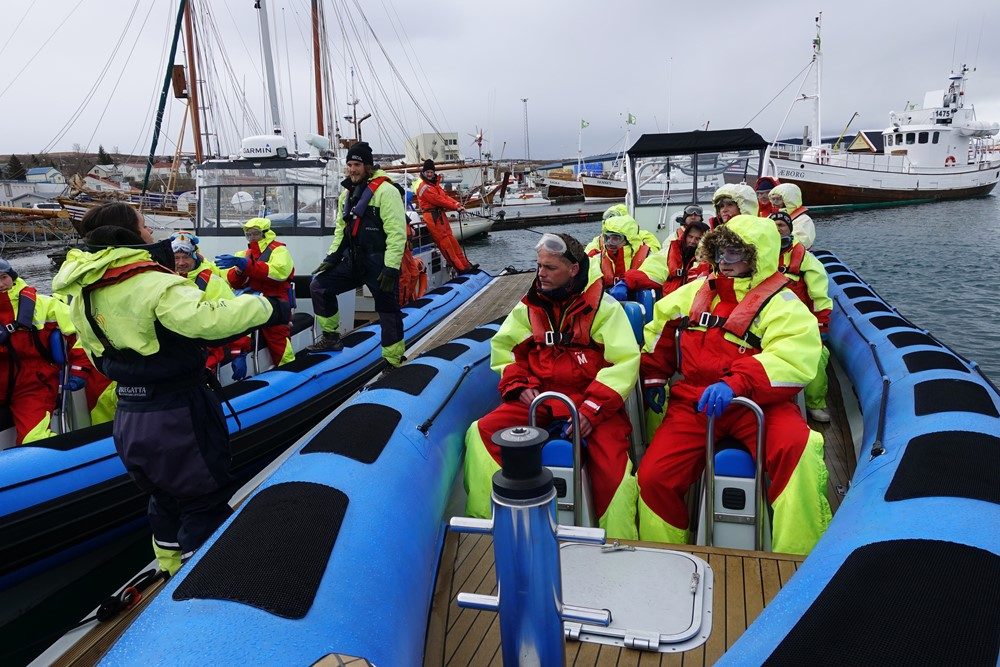
Put on the mandatory thermal safety overalls and life jacket with assistance from the crew.
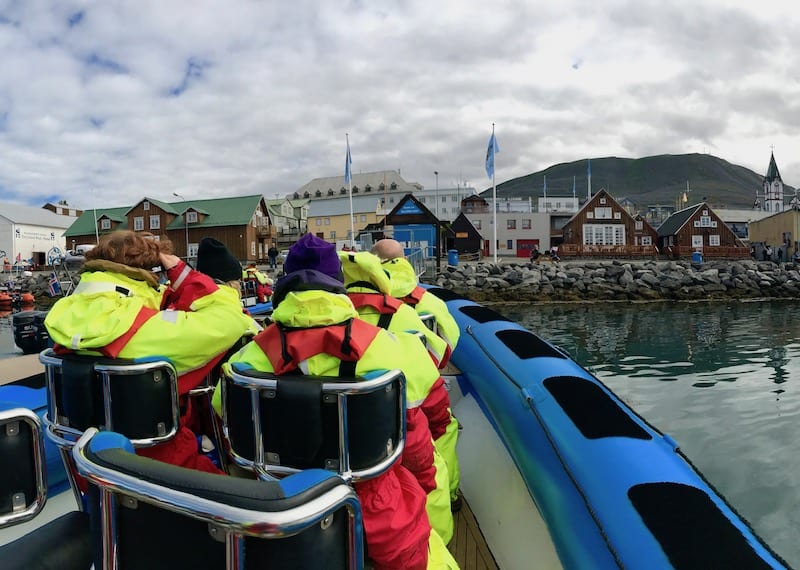
Walk down to Husavik harbor and step onto the rigid inflatable boat to take your assigned straddle seat.
Speed across Skjálfandi Bay to search for humpback whales, minke whales, and dolphins.
Approach Lundey during the nesting season to observe thousands of puffins colonizing the cliffs.
Cruise back to Husavik harbor, disembark, and return your safety gear at the center.
The deep bay where the tour navigates in search of wildlife. Over 10 species of cetaceans visit these waters each year, including the massive blue whale and active humpback whales feeding on rich plankton currents.
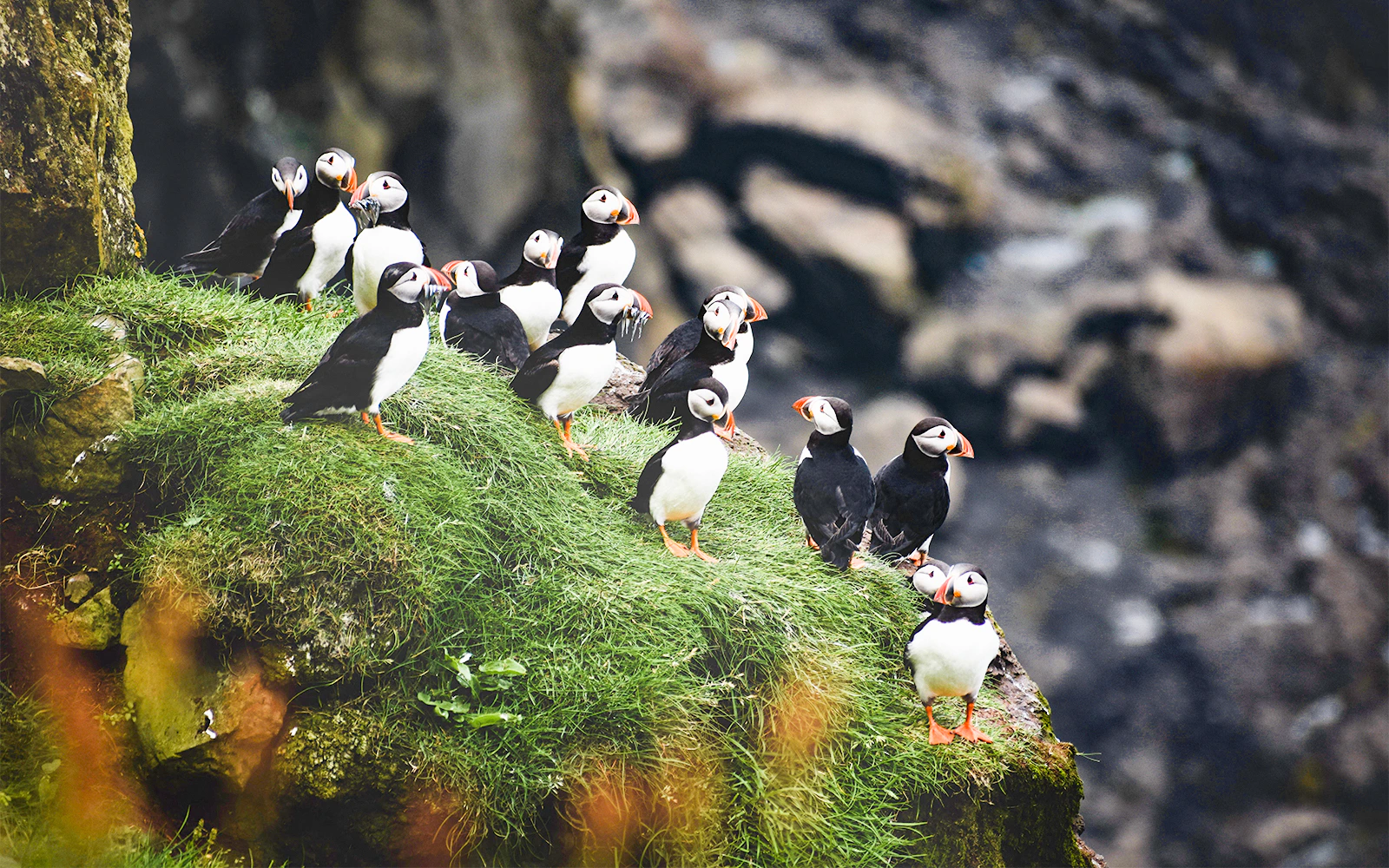
A rocky, uninhabited island located in the outer part of the bay. During the summer nesting season from April to August, it becomes home to an estimated 20,000 Atlantic puffins.
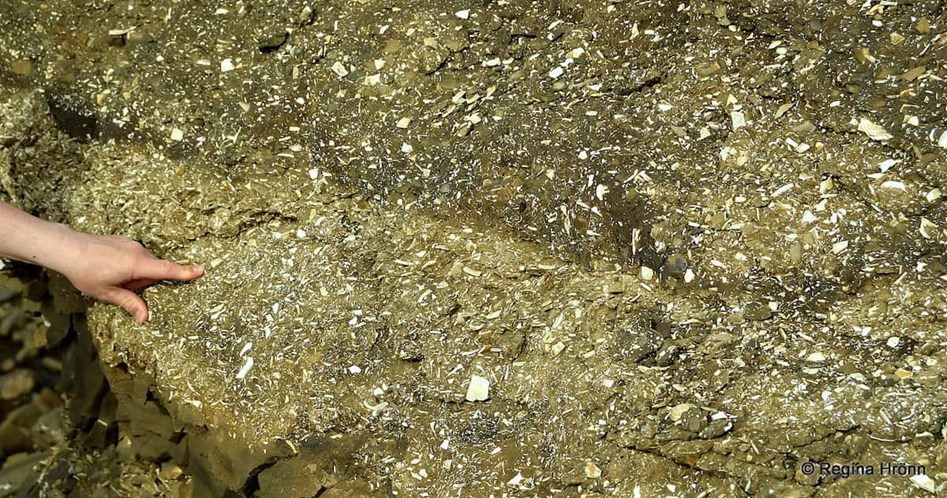
A rugged headland bordering the eastern side of the bay. The cliffs display distinct geological strata containing ancient fossil shells that are more than two million years old.
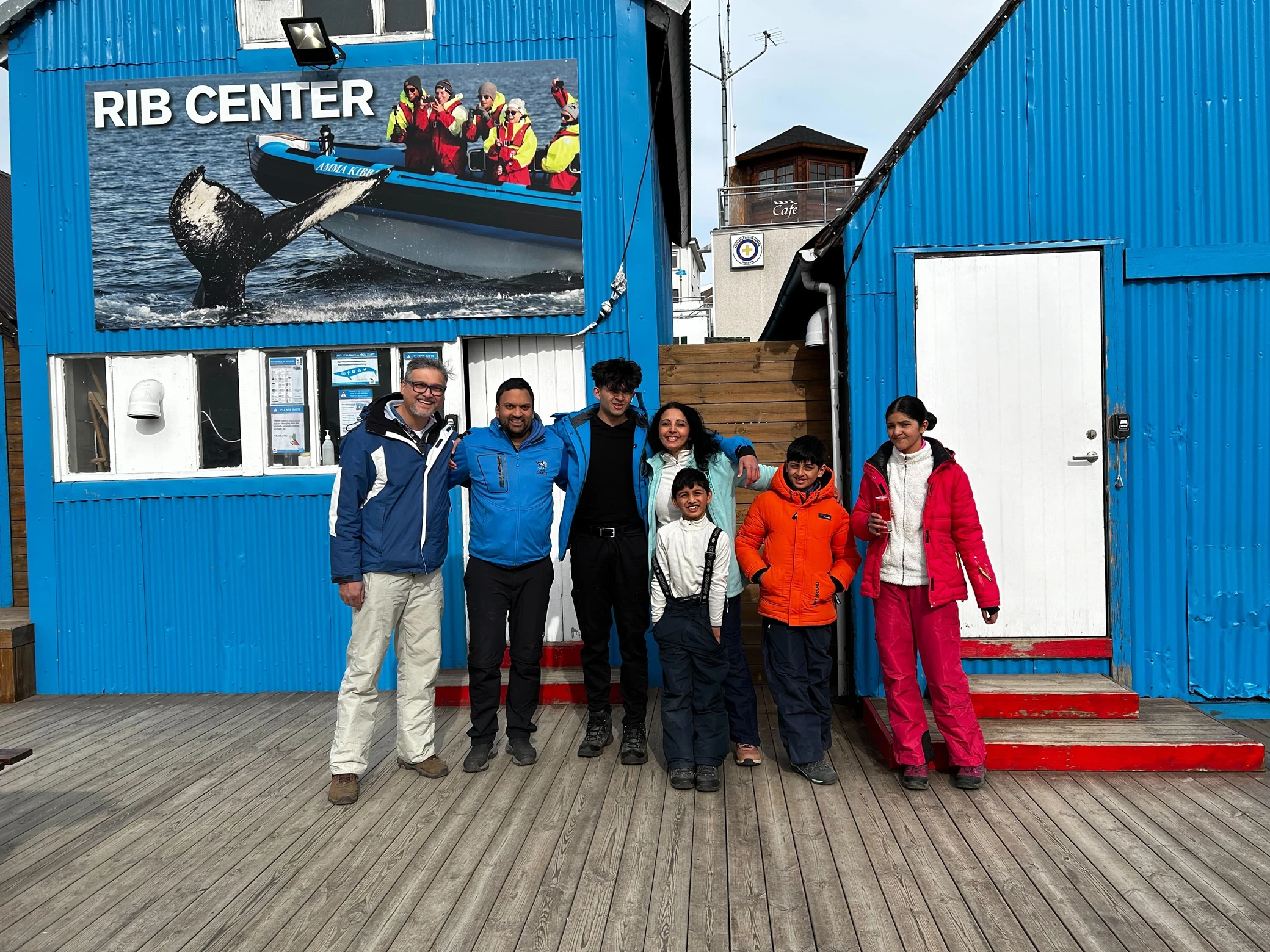
The preparatory facility on the harbor front where safety procedures are explained. Here, passengers are fitted with specialized windproof and water-resistant thermal overalls to ensure comfort at sea.
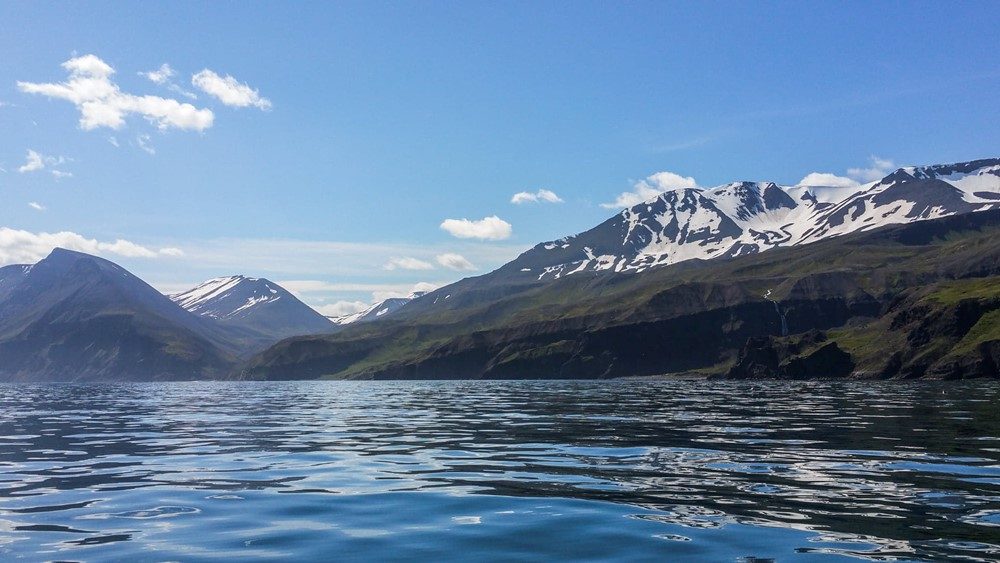
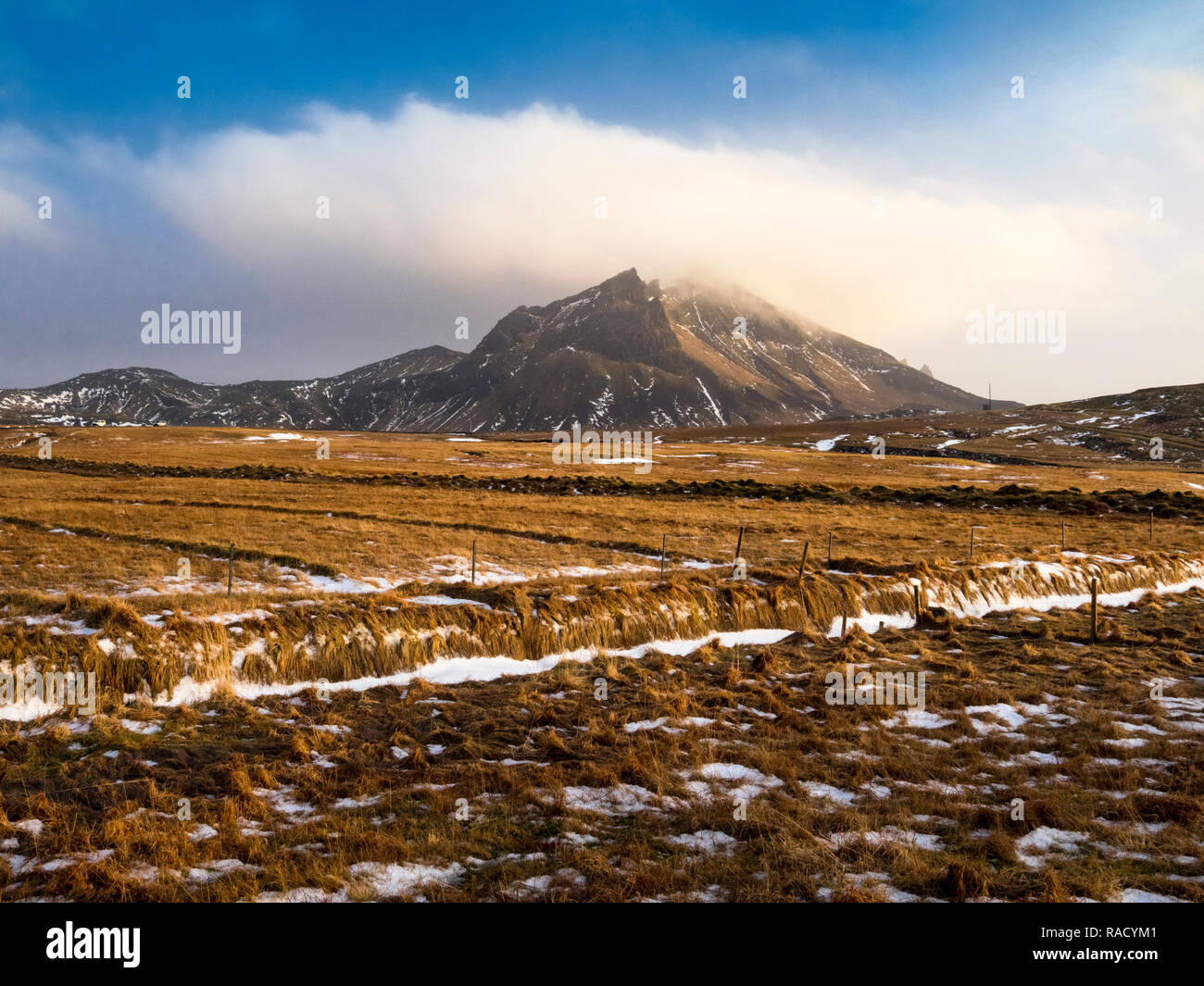
The dramatic mountain range framing the western side of the bay. These peaks rise up to 400 meters above sea level and remain partially snow-covered even during the height of summer.
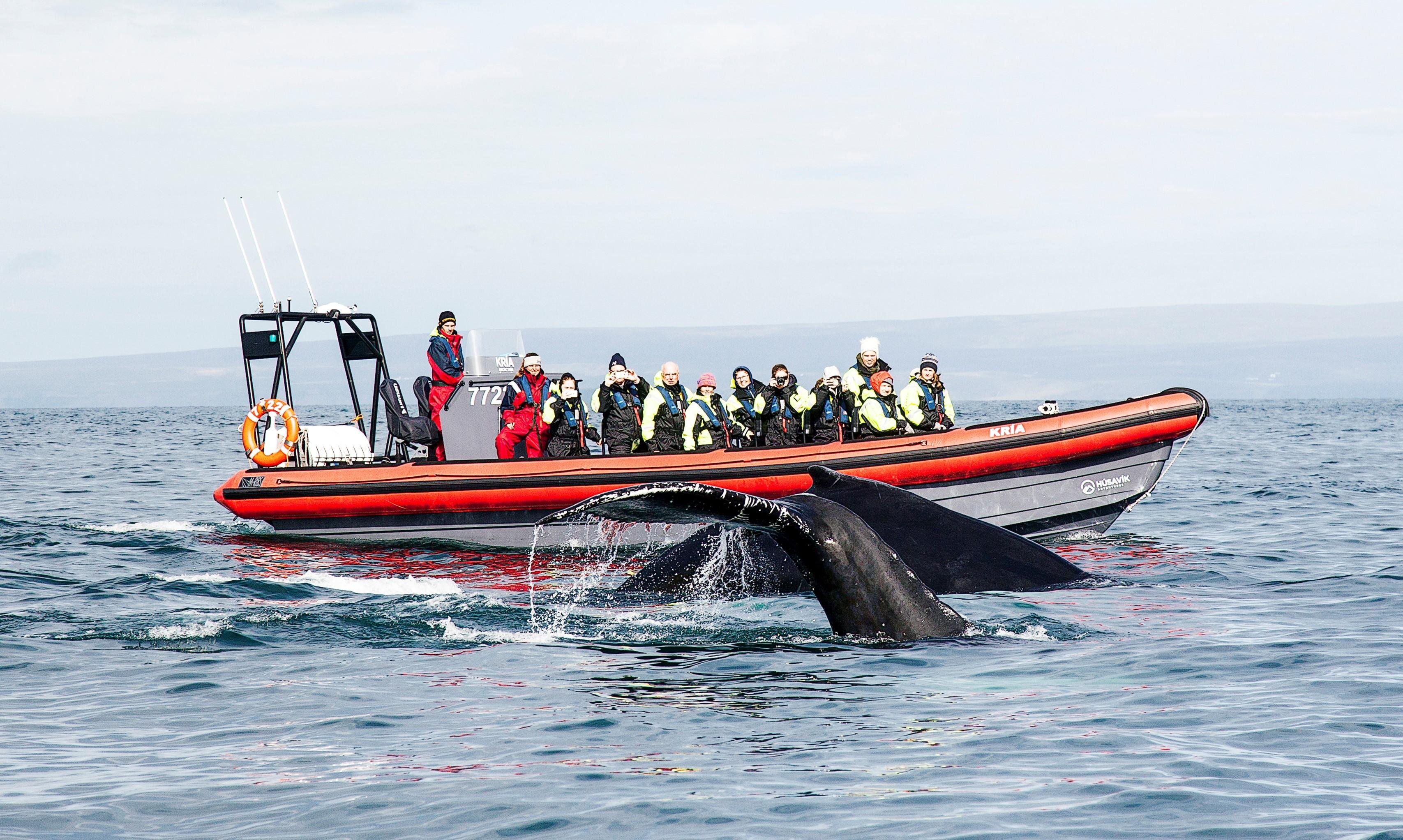
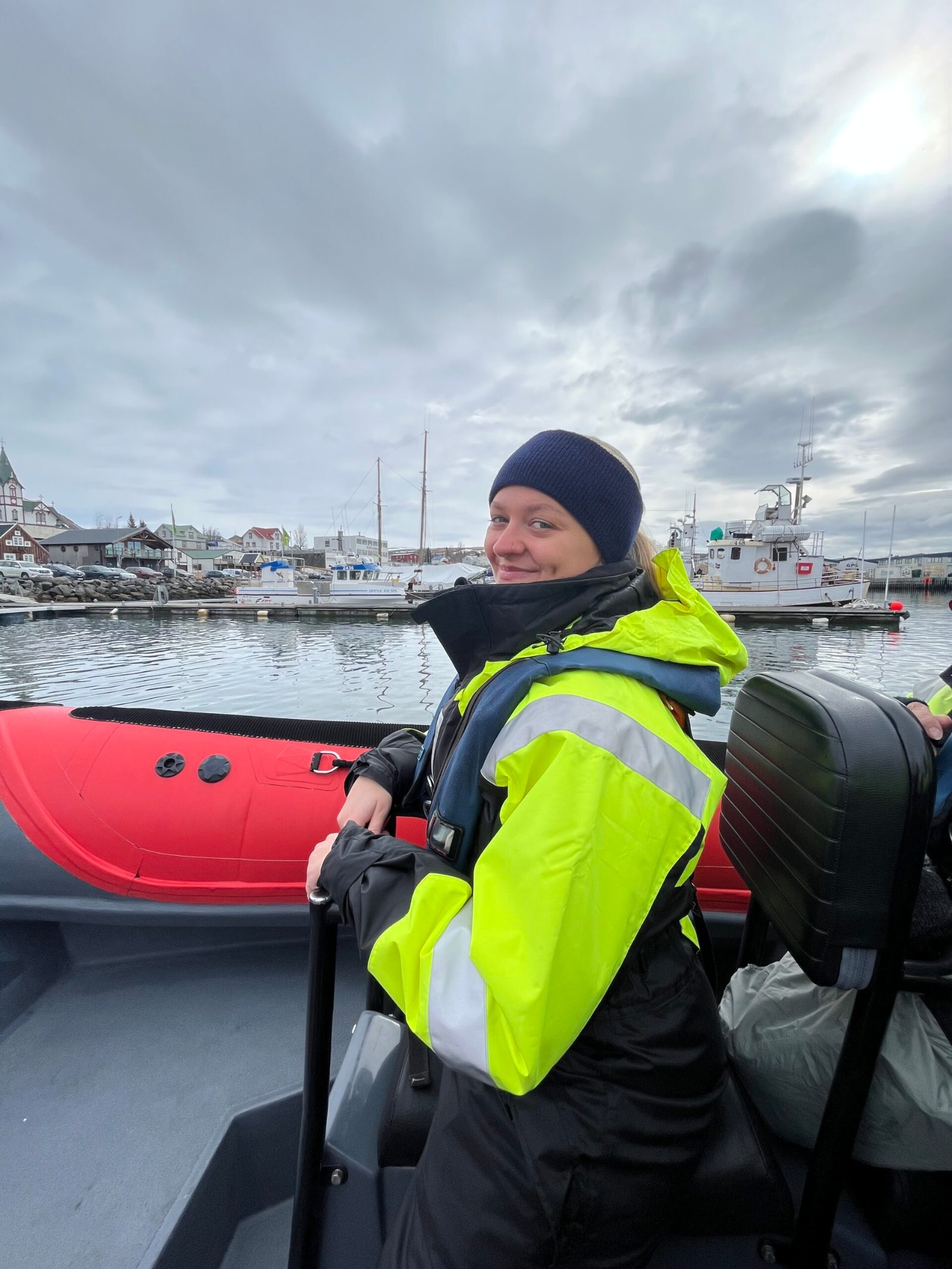
You gather at the Garðarsbraut harbour front, pull on the insulated flotation suit handed to you, and step down onto the pontoon. On a husavik whale watching rib boat you straddle a padded saddle seat, grip the handrail, and feel the engines lift the hull as the town falls away behind the wake.
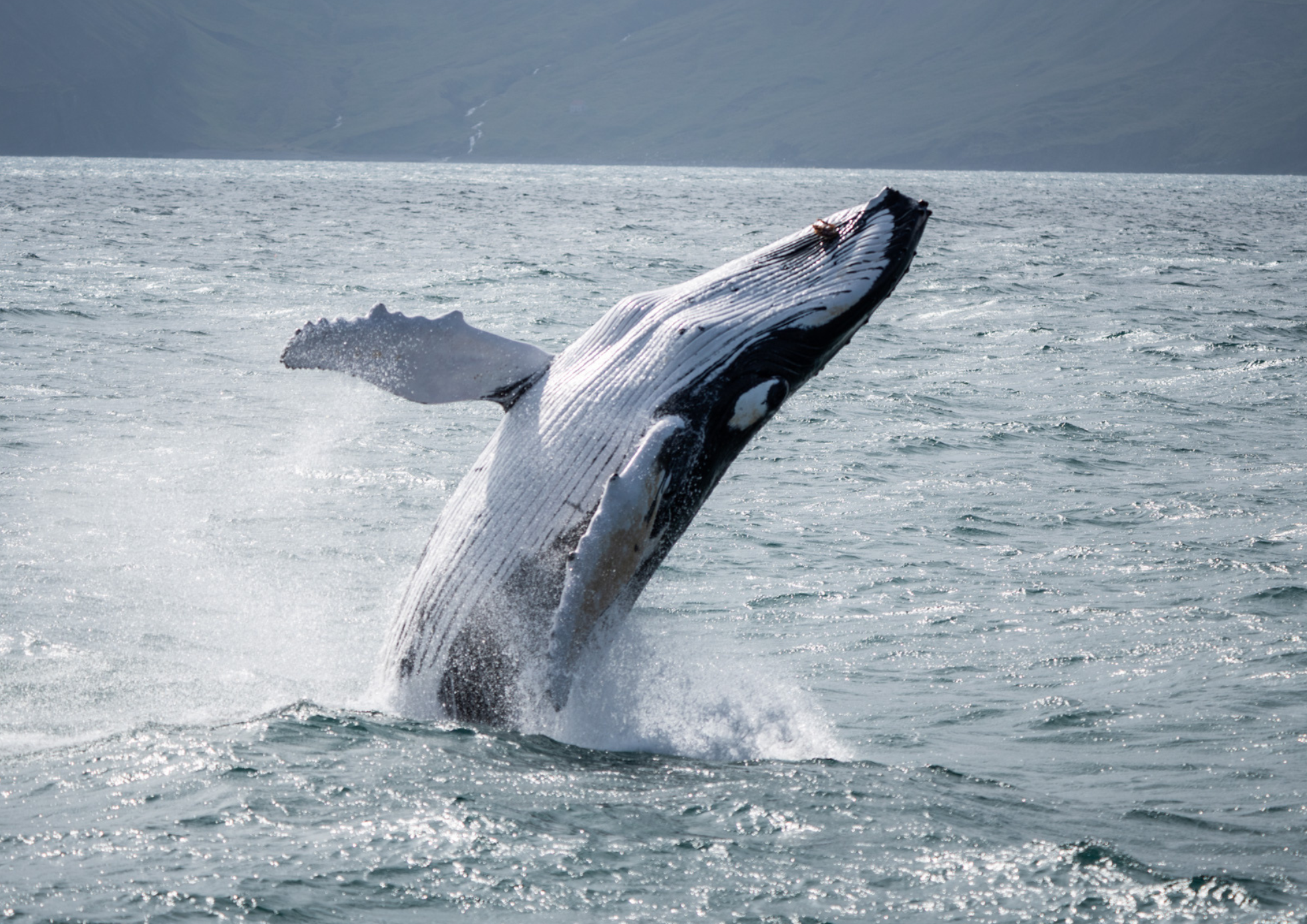
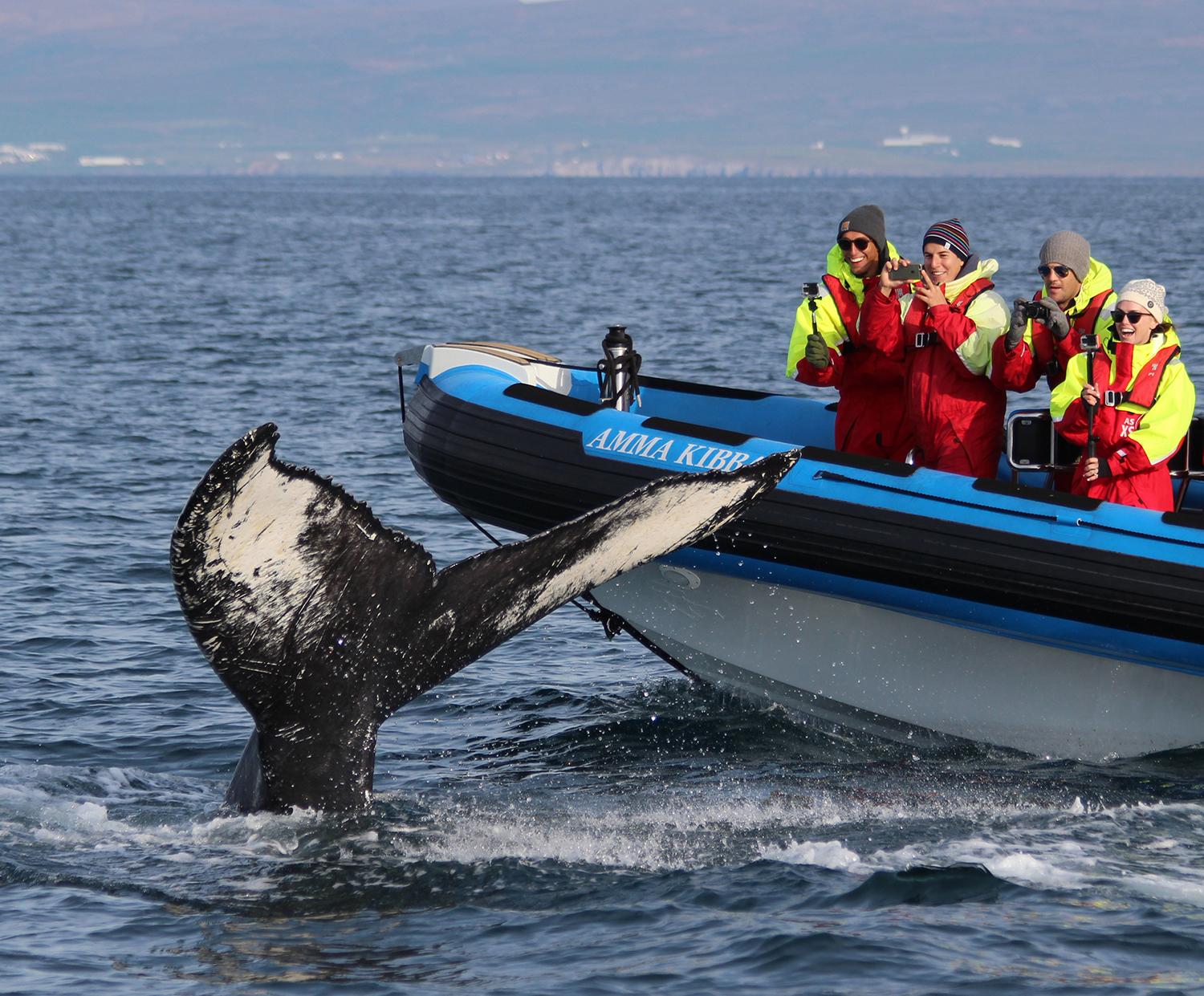
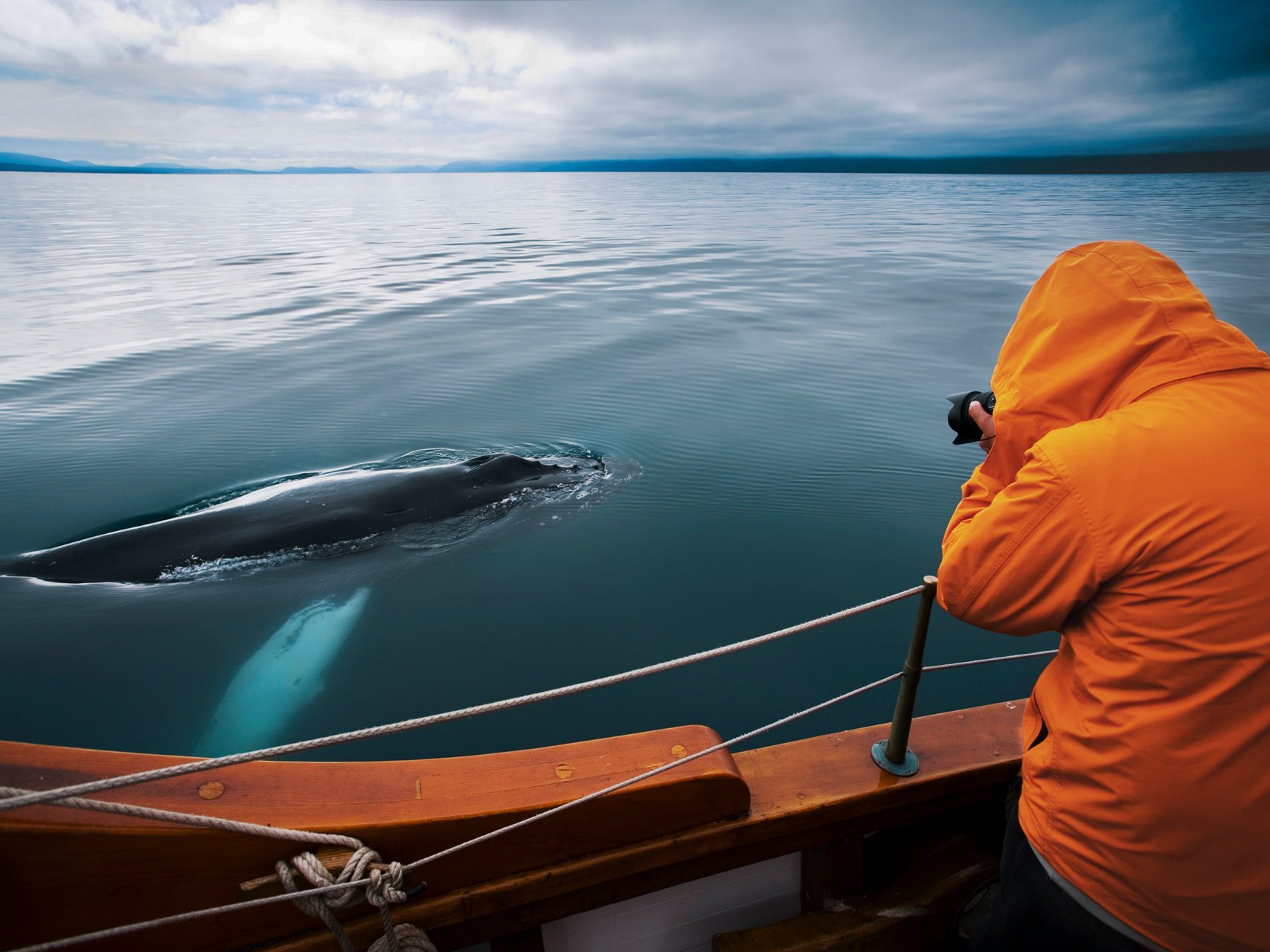
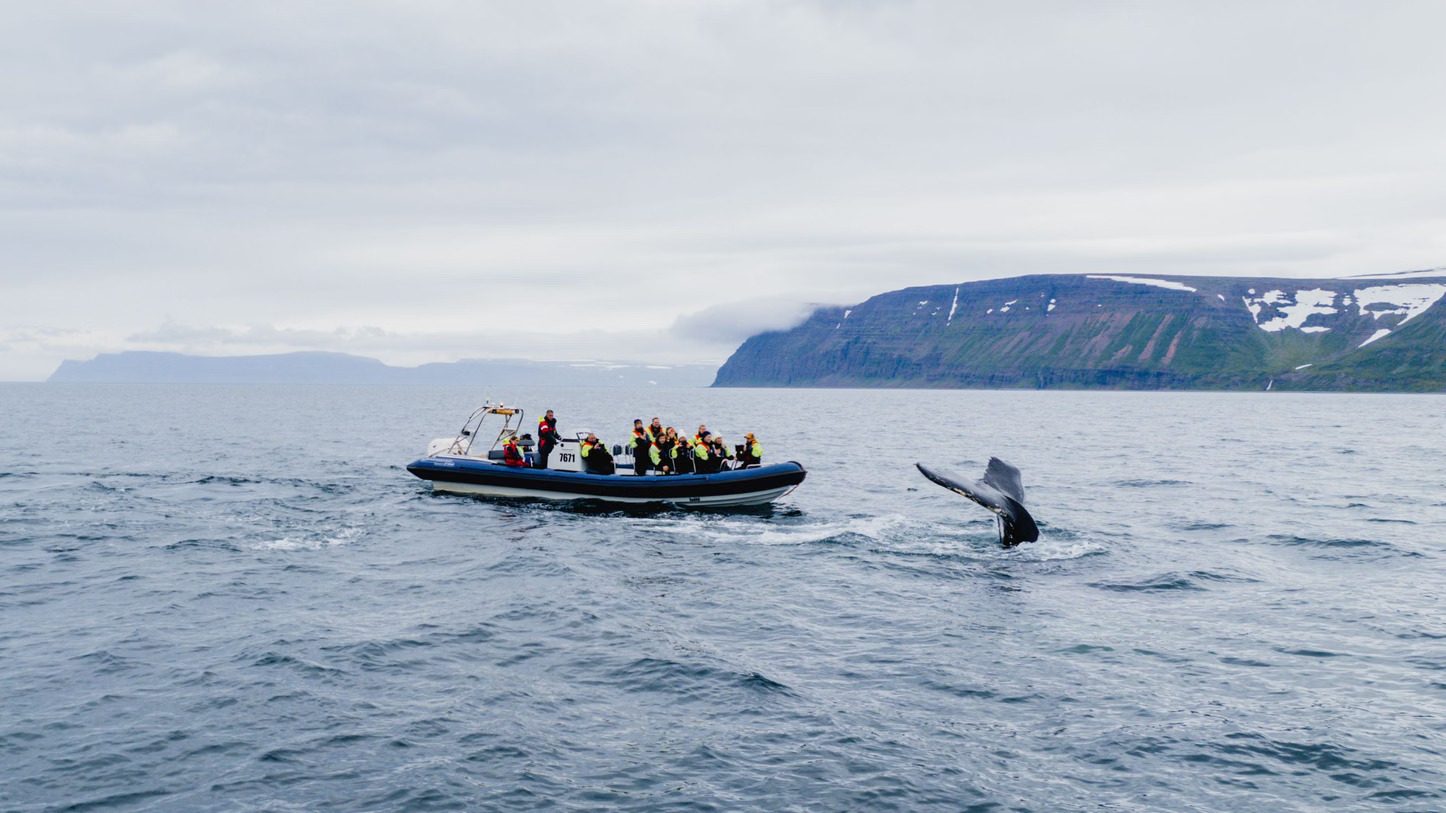
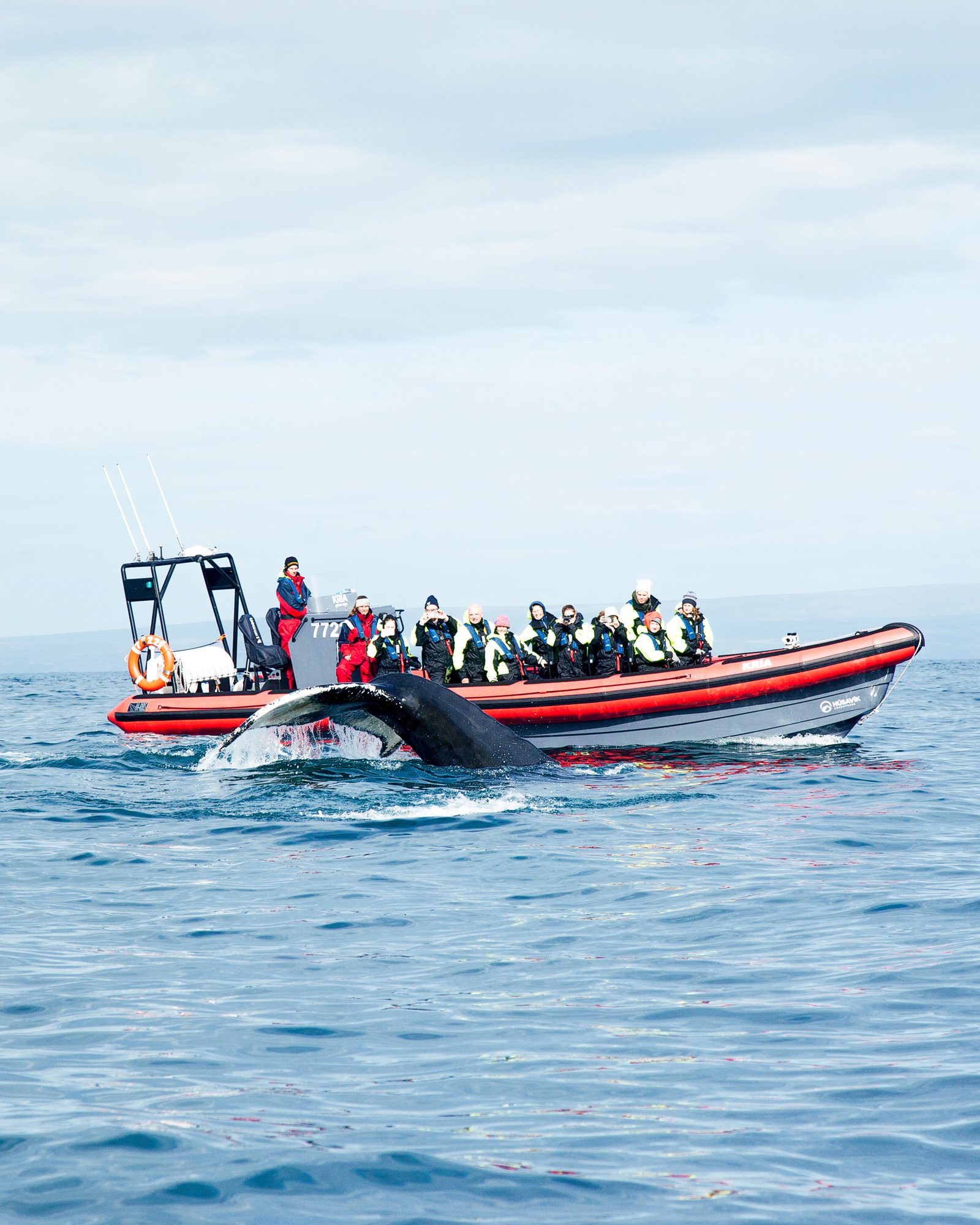
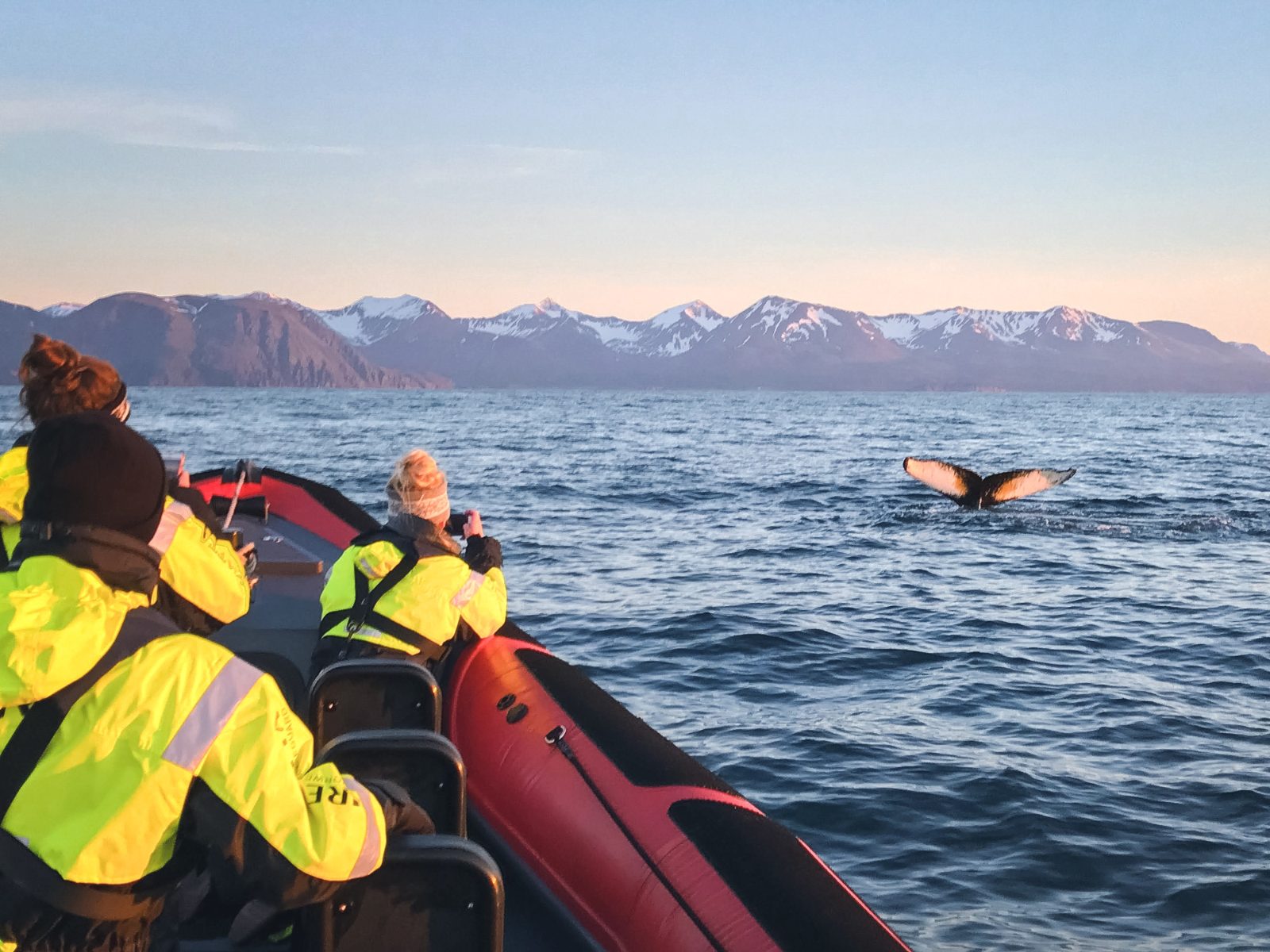
Within minutes the bay opens out. You scan the flat water for a blow, that grey exhale hanging above the surface, and the skipper cuts the throttle the moment someone spots one. The boat drifts. You wait. A humpback surfaces close enough that you hear the breath before you see the back arch and the fluke lift, then slide under.
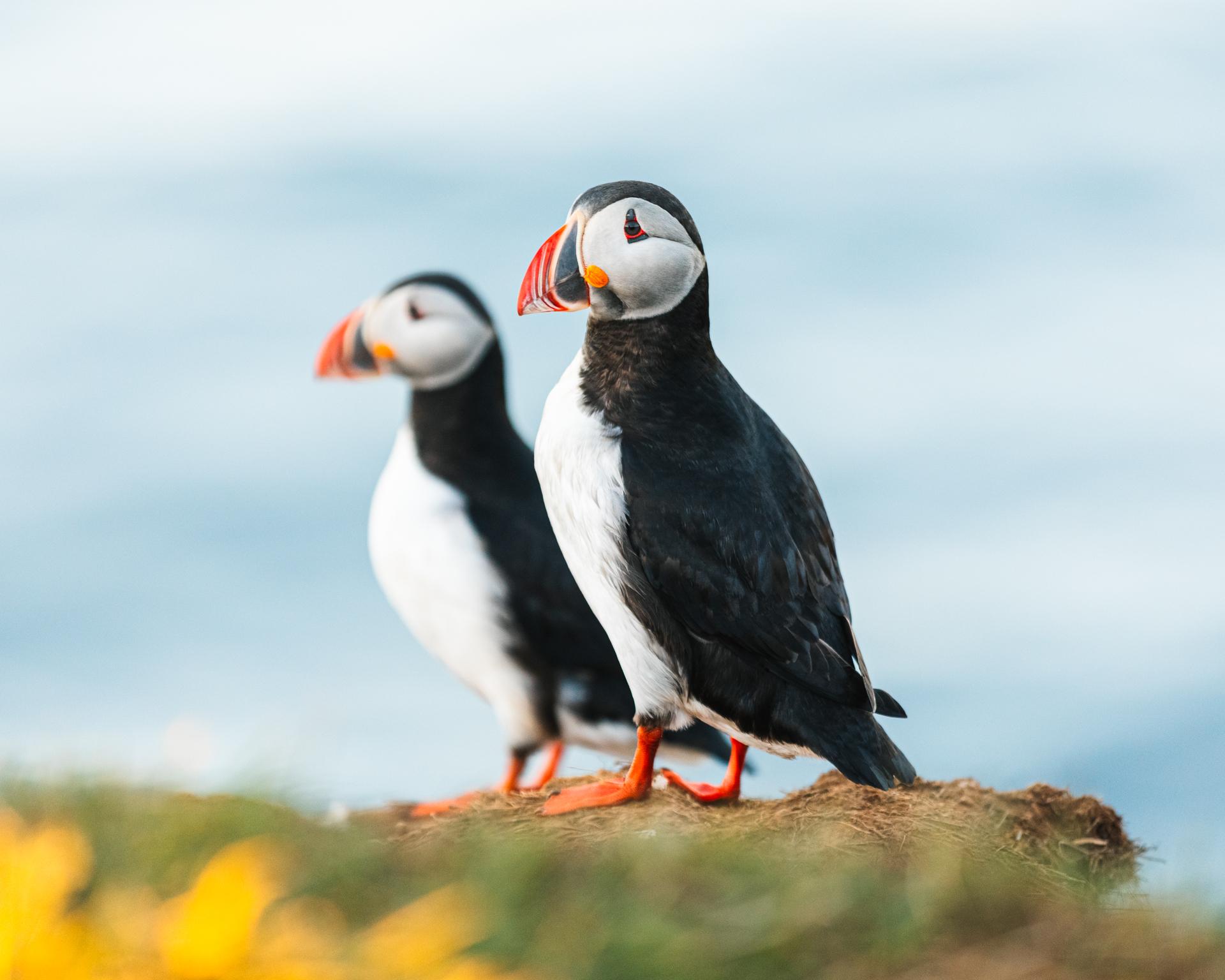
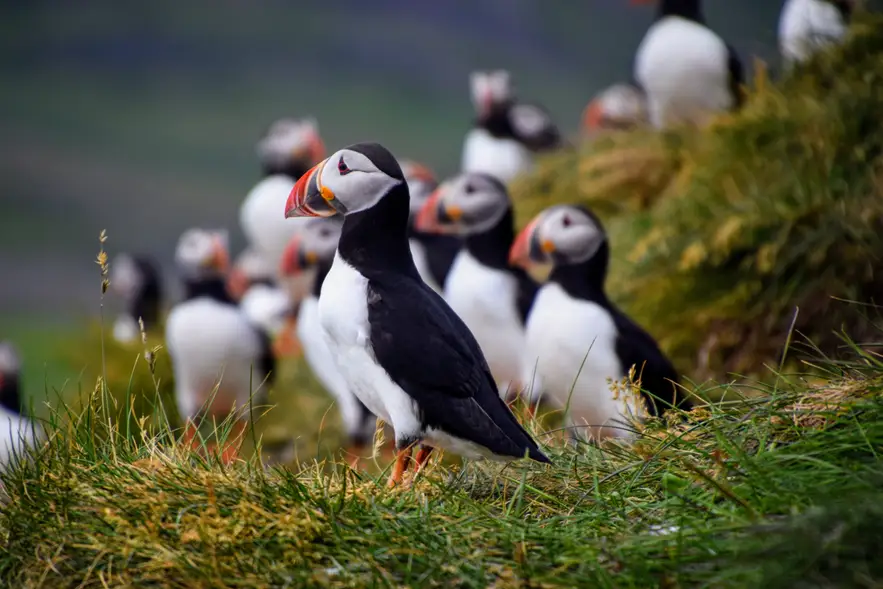
You turn toward Lundey, where puffins whir off the cliffs in tight, clockwork lines and bob in rafts on the swell. The guide points out white-beaked dolphins crossing the bow, and you brace as the RIB carves back through the chop, spray stinging cold across your cheeks.
By the time the harbour returns into view your hands are numb and your eyes are still fixed astern. You climb the ladder, peel off the suit, and stand a moment on the quay, the diesel and salt still on the air, replaying the exact second the tail broke the surface.
All the details about your upcoming adventure in one place
Skjálfandi Bay draws more than twenty species of cetacean into its cold, plankton-rich water each summer, a concentration that turned a small fishing town into the self-declared whale capital of Iceland.
Húsavík sits on the bay's eastern shore, its timber church and low harbour front backed by the snow-streaked shoulders of Víknafjöll. The town has watched whales here for well over a century, though the pursuit changed direction entirely: harpoons gave way to hydrophones, and hunting boats were refitted to carry passengers instead.
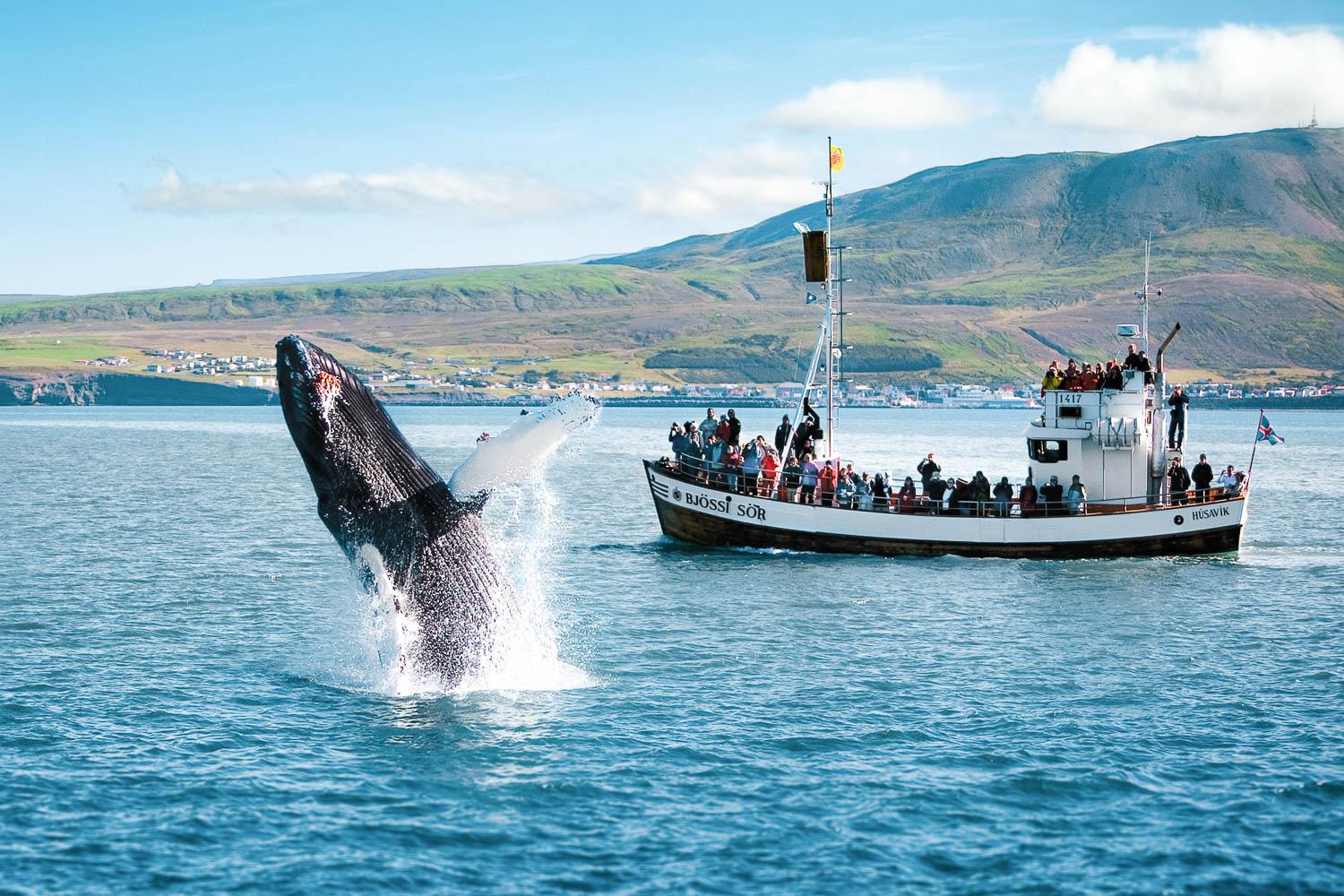
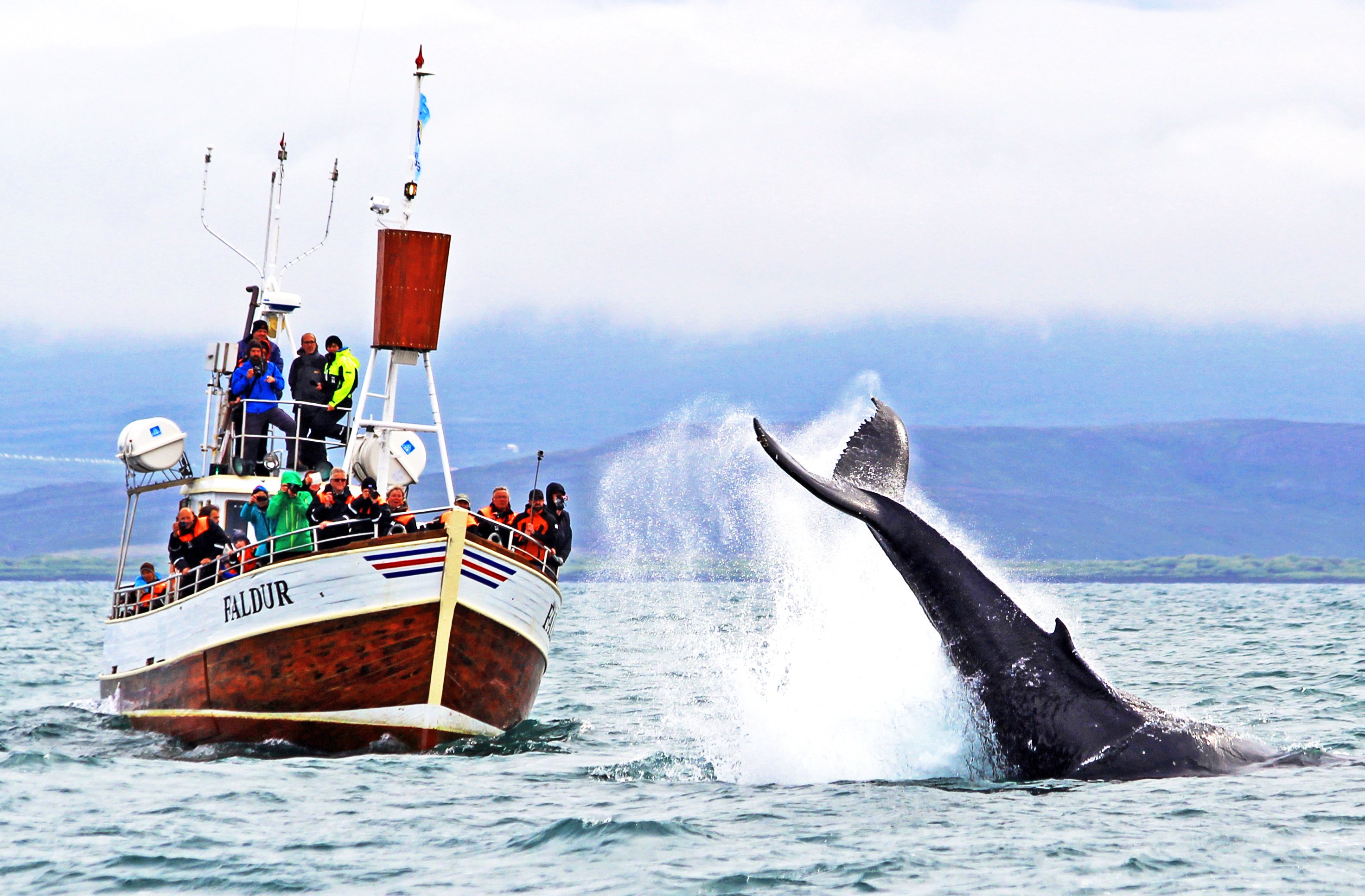
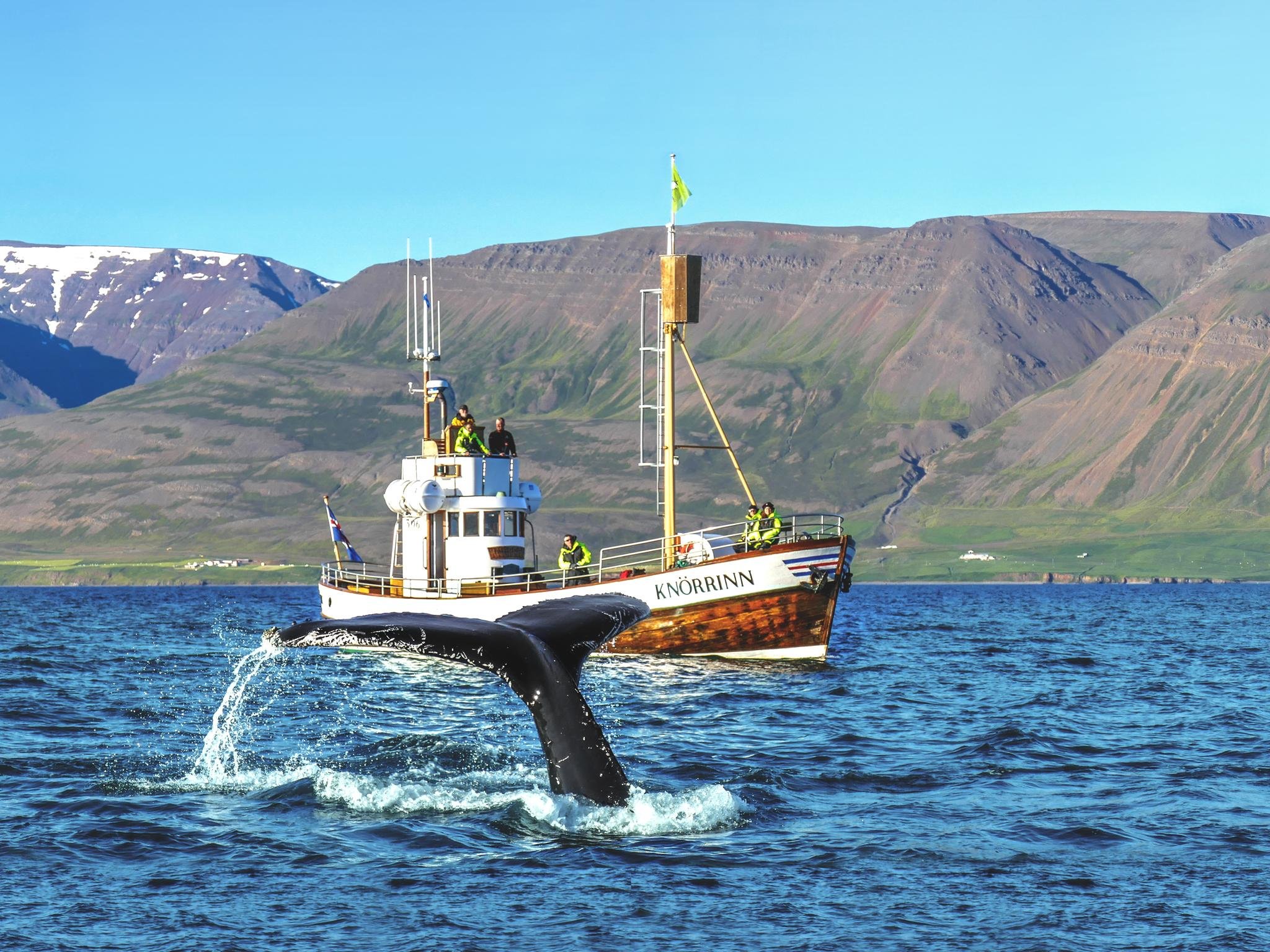
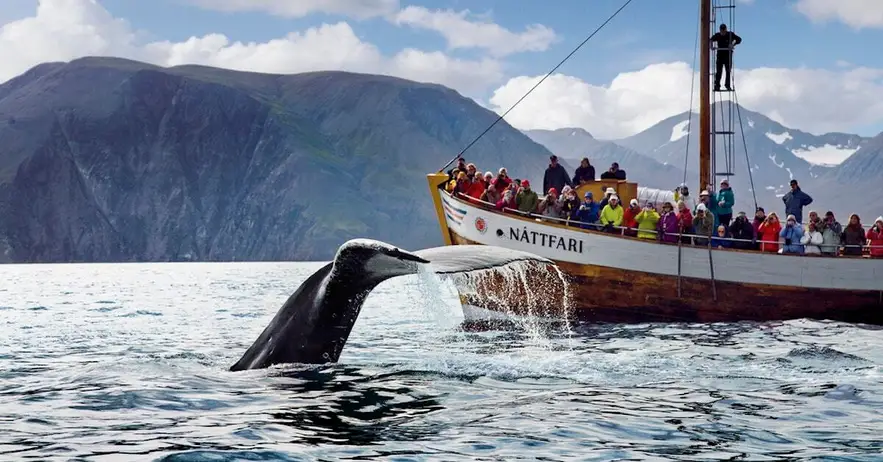
The first organised sailings left this harbour in 1995, using restored oak vessels that had once worked the herring and cod grounds. Those same broad-beamed boats still glide out from Garðarsbraut, joined now by rigid inflatable craft that reach the feeding grounds in a fraction of the time. A husavik whale watching rib boat covers open water fast, low to the surface, cutting the crossing so the bay's residents fill more of the trip. The contrast defines the fleet — slow oak keels for the patient, quick inflatables for those chasing distance.
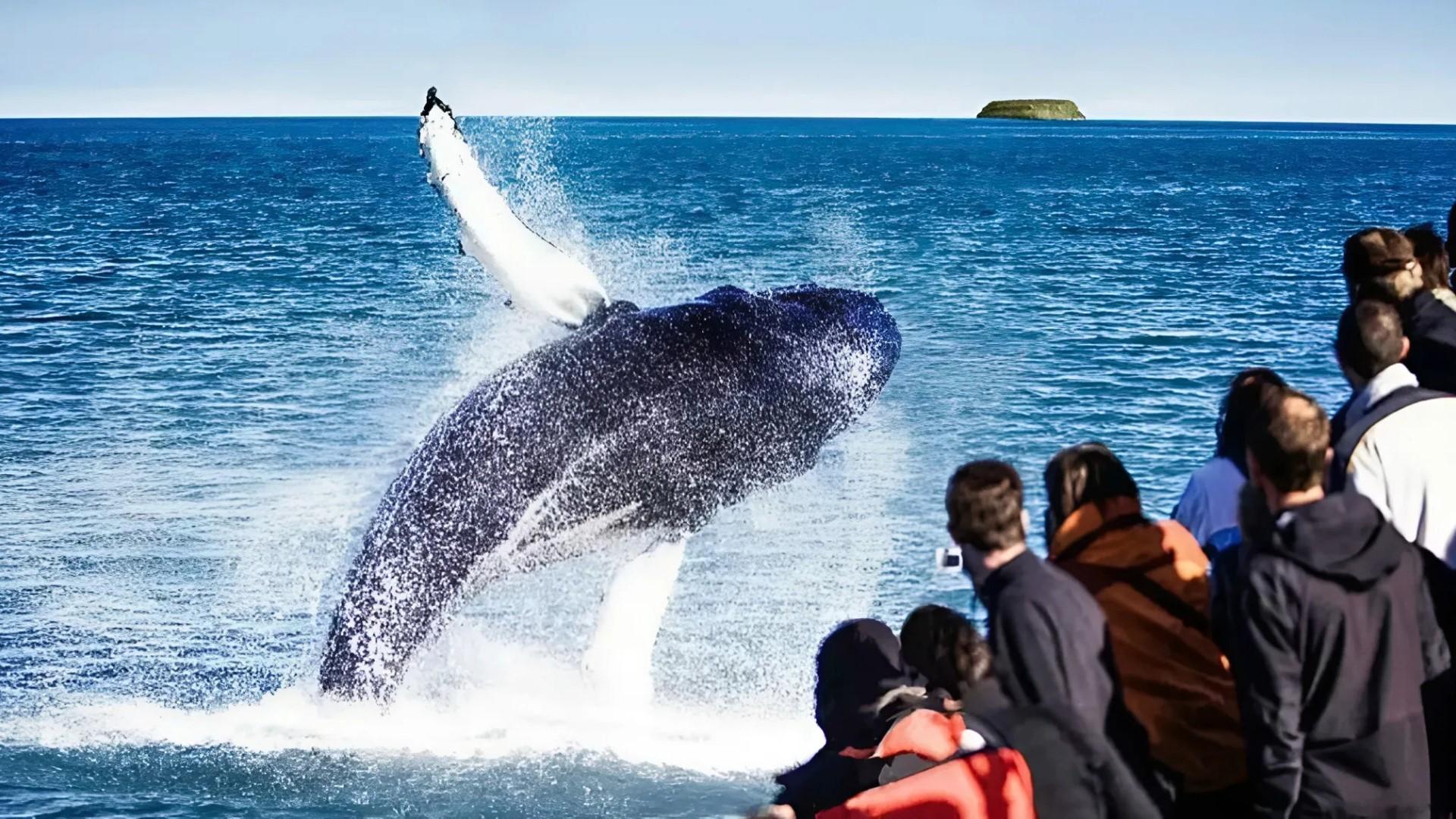
What surfaces here rewards both. Humpbacks breach and lob-tail within metres of idling hulls; minke whales roll past in silence; white-beaked dolphins ride the wake. In good years blue whales, the largest animals ever to have lived, pass through the mouth of the bay. The nearby island of Lundey shelters a dense puffin colony, and many crossings loop past its burrowed cliffs before turning for shore. The bay's productivity comes from meltwater draining off the Vatnajökull ice cap, which feeds the plankton blooms that anchor the whole food chain.
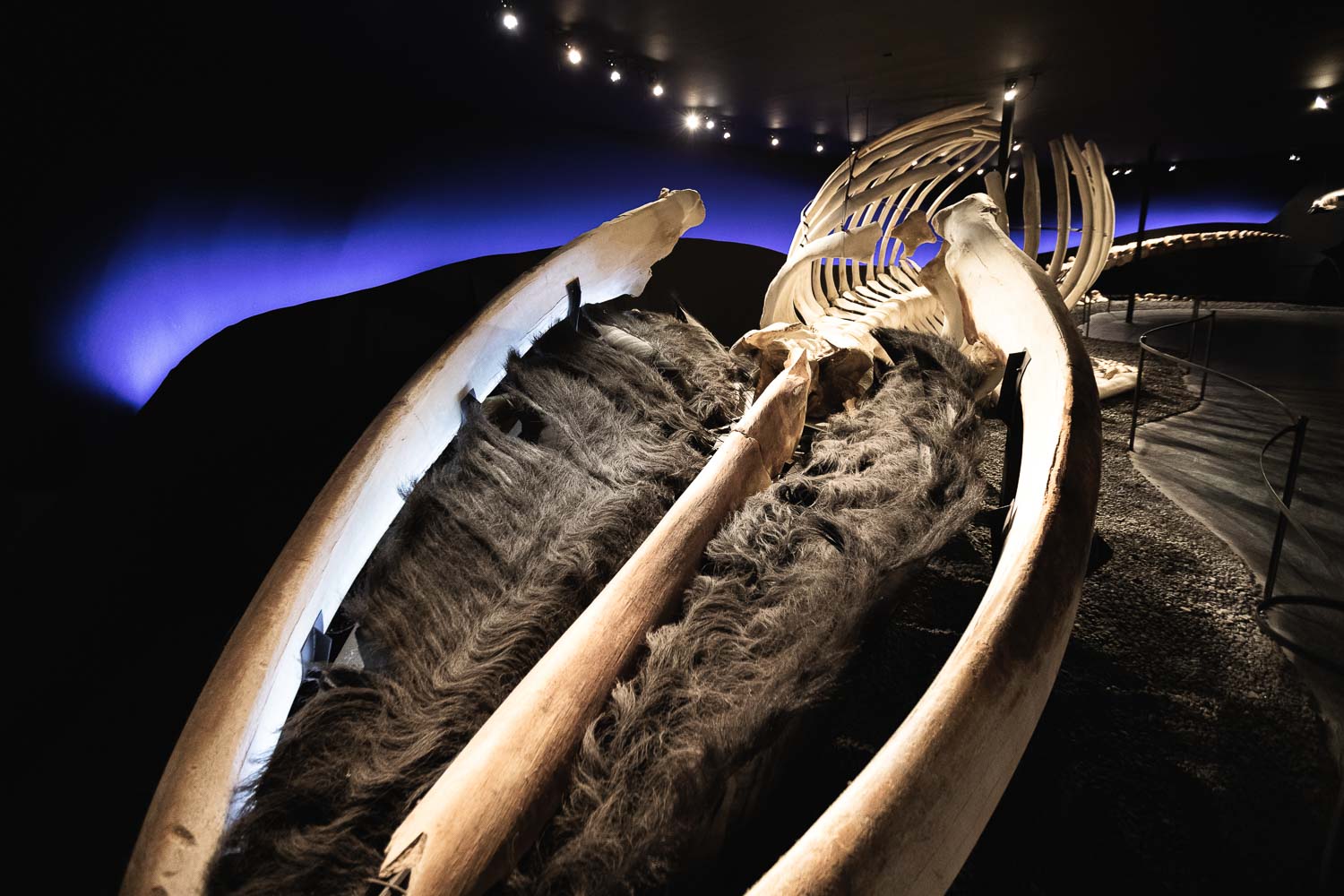
Húsavík has built its identity around this science. The Húsavík Whale Museum, housed in an old slaughterhouse by the water, hangs full cetacean skeletons from its rafters and supplies data to researchers tracking individual animals by fluke patterns. The town's húsavík whale watching rib boat operators log every sighting, feeding a record that stretches back decades. A húsavík whale watching rib boat trip therefore joins a working conservation effort as much as a sightseeing outing. That braiding of livelihood, research, and spectacle explains why a town of barely two thousand people has become one of Europe's defining marine-wildlife destinations, its reputation carried far beyond the Arctic Circle it nearly touches.

Harpoons gave way to hydrophones, and hunting boats were refitted to carry passengers instead.
Dressing in multiple warm layers is essential because temperatures at sea are significantly colder than on land. Guests must wear the provided thermal safety suit over their personal clothing, along with closed-toe, flat footwear. Bring a warm hat and gloves to protect against wind chill during this Husavik Whale Watching RIB Boat excursion.
Only small personal bags or camera pouches are permitted on the vessel due to limited space. Larger backpacks and luggage should be left in the secure lockers at the ticket center before boarding.
Cameras with secure neck straps or wrist lanyards are highly recommended to prevent accidental drops into the sea. Waterproof casings or protective plastic wraps are advised to shield your lenses from salty ocean spray.
Children must be at least 8 years old and 130 centimeters tall to board the Husavik Whale Watching RIB Boat. A parent or guardian must accompany minors at all times during the journey.
The physical nature of riding a rigid inflatable boat means it is not suitable for individuals with limited mobility, back or neck problems, or wheelchair users. Boarding requires stepping over the inflatable pontoons and holding onto straddle seats.
No food or open beverages are allowed on board the vessel to prevent spills and protect the marine environment. Bottled water is permitted but must be kept secure in your pockets or safety suit.
Calmer waters are common in the morning.
Midday runs have high seabird activity.
Soft Arctic lighting is common.
Daily departures continue as scheduled.
Weather conditions are monitored closely.
Weekend schedules remain active.
Weekly schedules conclude for the weekend.
Opening Hours
Mon–Sun 08:00–21:00
Address
Garðarsbraut, 640 Húsavík, Iceland
Best Arrival
09:00–16:00
Accessibility
Not suitable for mobility-impaired or wheelchair users
Baggage Policy
Small personal items only; large bags must be stored at the ticket office
Car · 1h 00m from Akureyri · Free parking
Drive along Route 85 directly into the center of Husavik. Free public parking is available in multiple lots near the harbor area.
Public transport · 1h 20m · Approx 3000 ISK
Take bus line 79 from Akureyri directly to the main bus stop in Husavik, which is a short walk from the ticket office.
Walk · 5–15m · Free
The ticket office and harbor are easily reachable on foot from any guesthouse or hotel within the town.
Full refunds are available for cancellations of your Husavik Whale Watching RIB Boat booking made at least 24 hours prior to departure. Standard entrance to the harbor area is 0 ISK, but tour fees are forfeited for late cancellations.
Recommended time
2-3 hours
Securing your husavik whale watching rib boat tickets online in advance is essential to guarantee your spot on these high-demand excursions. You should arrive at the harbor thirty minutes before your scheduled departure to receive a safety briefing and gear fitting. The standard husavik whale watching rib boat tour takes about two hours, navigating through Skjálfandi Bay to seek out humpback whales. This speedier option allows you to cover more area than traditional wooden boats, maximizing your viewing opportunities. For the calmest sea conditions and peak animal activity, booking the husavik whale watching rib boat during morning hours is highly recommended. The experience ends back at the harbor, where you can quickly return your gear and continue exploring the town. Depending on the season, operators run husavik whale watching rib boat tours until late in the evening under the midnight sun.
Crowd levels through the day
Weather · crowds · average price — dots go green to amber to red as each metric rises.
Tours resume in April with crisp air and snowy mountain backdrops, though puffins do not arrive until mid-month. Temperatures range from 0 to 5 degrees Celsius.
Peak whale activity occurs from June to August, when humpback whales feed in Skjálfandi Bay. This is the optimal time for a Husavik whale watching RIB boat tour, with long daylight hours and nesting puffins.
September and October offer fewer crowds and beautiful autumn colors on the mountains, though daylight hours decrease quickly. Sea conditions can become rougher, requiring flexible schedules.
The high-speed RIB tours do not operate from November to March due to harsh winter weather, sub-zero temperatures, and short daylight hours.
Schedules fill up quickly during the peak summer months, especially since RIB boats carry only 12 passengers. Securing your spot online weeks ahead is recommended.
Even though RIB boats are stable, the fast movements on open water can cause motion sickness. Consider taking a preventative pill an hour before boarding.
Wind chill can be intense when the boat travels at high speeds. Bring a neck gaiter or scarf that you can pull up over your face to block the cold air.
There is no storage space on the boat for anything larger than a small purse. Use the lockers at the ticket office to keep your belongings dry and safe.
The check-in process requires fitting specialized safety suits, which takes time. Arriving 30 minutes before your departure ensures a stress-free boarding.
Ocean spray is common during the trip. Keep your phone or camera inside your waterproof safety suit when the boat is moving at high speeds.
Garðarsbraut, 640 Húsavík, Iceland
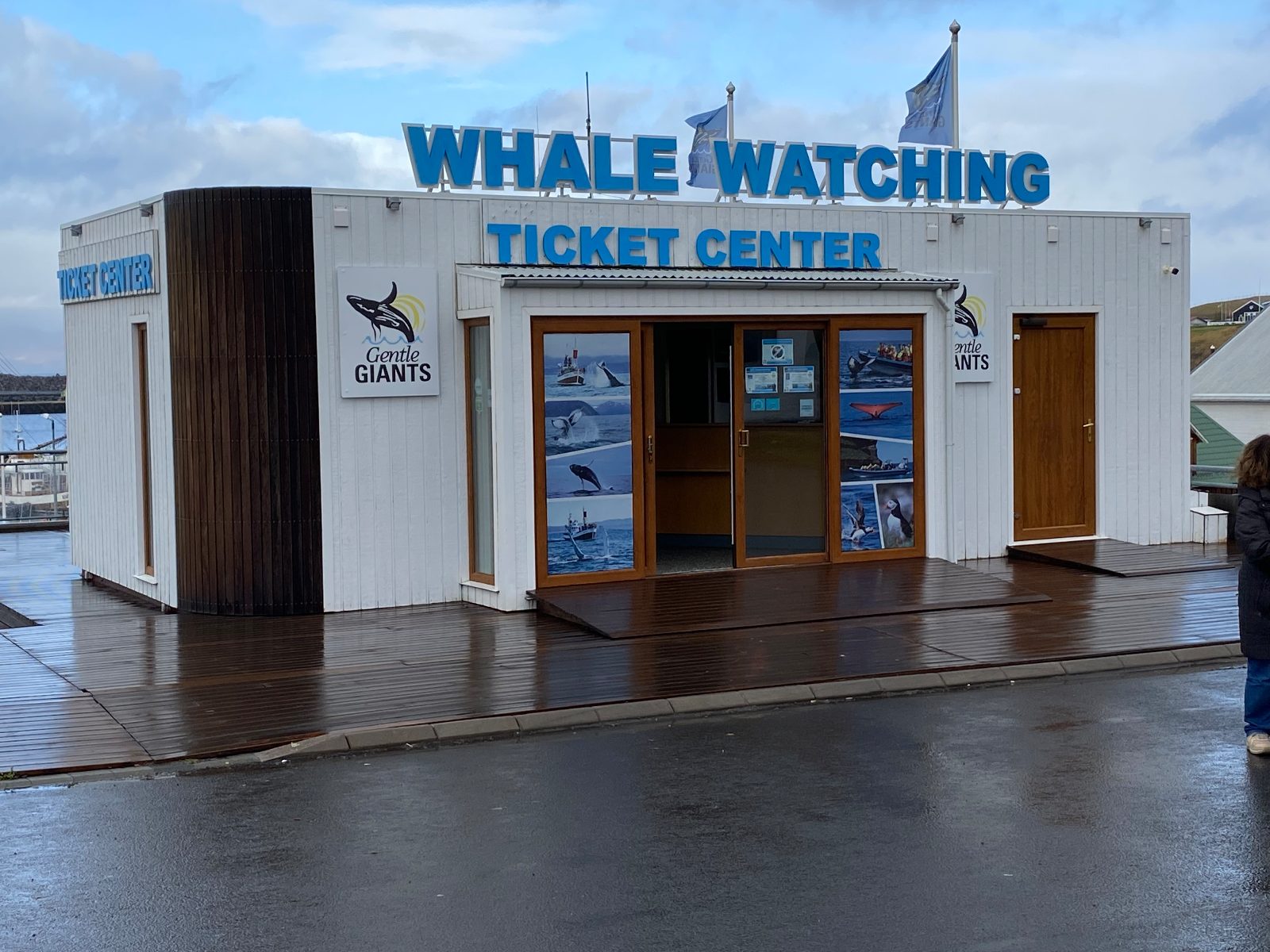
Look for the big white building with blue flags in the town center, where you must check in before heading to the harbor.
Get directionsHúsavík carries the name given by Garðar Svavarsson, the Norse voyager who wintered on the shore of Skjálfandi Bay around 870. His turf dwellings became the House Bay, and the modern quay on Garðarsbraut still honours him. For centuries the settlement lived by cod and herring. Organised Húsavík whale watching began only in 1995, when North Sailing sent a converted oak schooner out to watch humpbacks feed in the cold northern water. Gentle Giants was founded in 2001 by Stefán Guðmundsson, a skipper descended from local fishing families. His restored wooden vessels first sailed the inner bay at a patient pace, echoing the harbour's older trade. Rising demand pressed the company toward speed. The first husavik whale watching rib boat tour used a rigid inflatable hull, reaching the outer feeding grounds in a fraction of the time the sailing boats required. The town's ambitions deepened when the Húsavík Whale Museum opened in 1997, cataloguing skeletons drawn from the bay. Rigid inflatable craft later widened the range of the fleet. They pushed against North Atlantic swells that stalled the heavier schooners. Skjálfandi Bay, fed by glacial rivers and dense plankton, rewarded the reach. Regular husavik whale watching rib boat tours carried guests toward minke whales, white-beaked dolphins, and, in strong summers, the blue whale. The harbour on Garðarsbraut remains the heart of the operation through 2026. Free access to the quay endures, while boarding is arranged at the water's edge. Húsavík now balances a long fishing heritage against a steady visitor trade, its wooden hulls berthed beside faster craft. Travellers securing husavik whale watching rib boat tickets step onto the same bay that Garðar named more than eleven centuries ago.
Garðar Svavarsson winters on Skjálfandi Bay and names the site Húsavík.
North Sailing runs Húsavík's first organised whale watching tours from a converted oak boat.
The Húsavík Whale Museum opens, documenting the bay's marine life.
Stefán Guðmundsson founds Gentle Giants at the Húsavík harbour.
Rigid inflatable boats join the fleet, reaching the outer feeding grounds faster than the schooners.
Tours still depart the Garðarsbraut quay, blending restored oak boats with RIB craft.
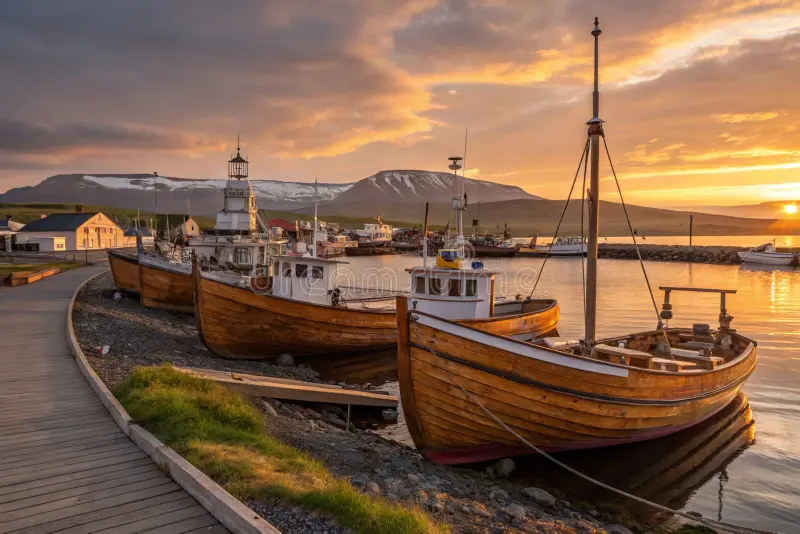
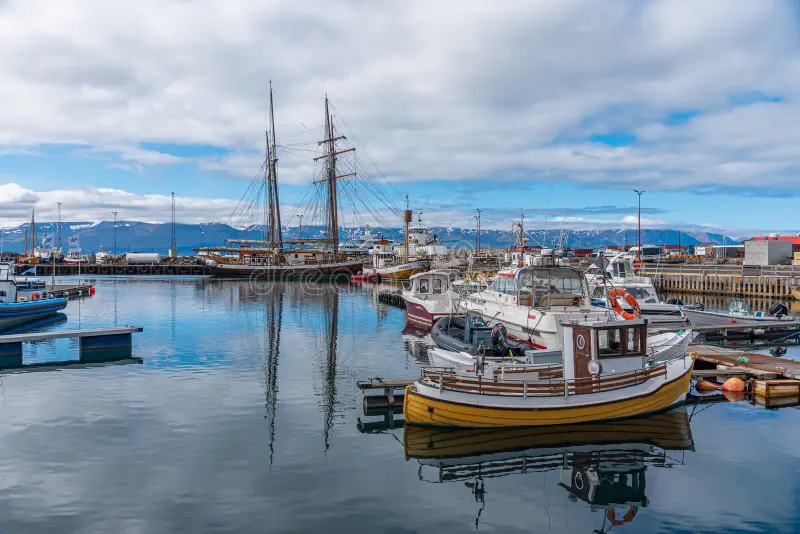
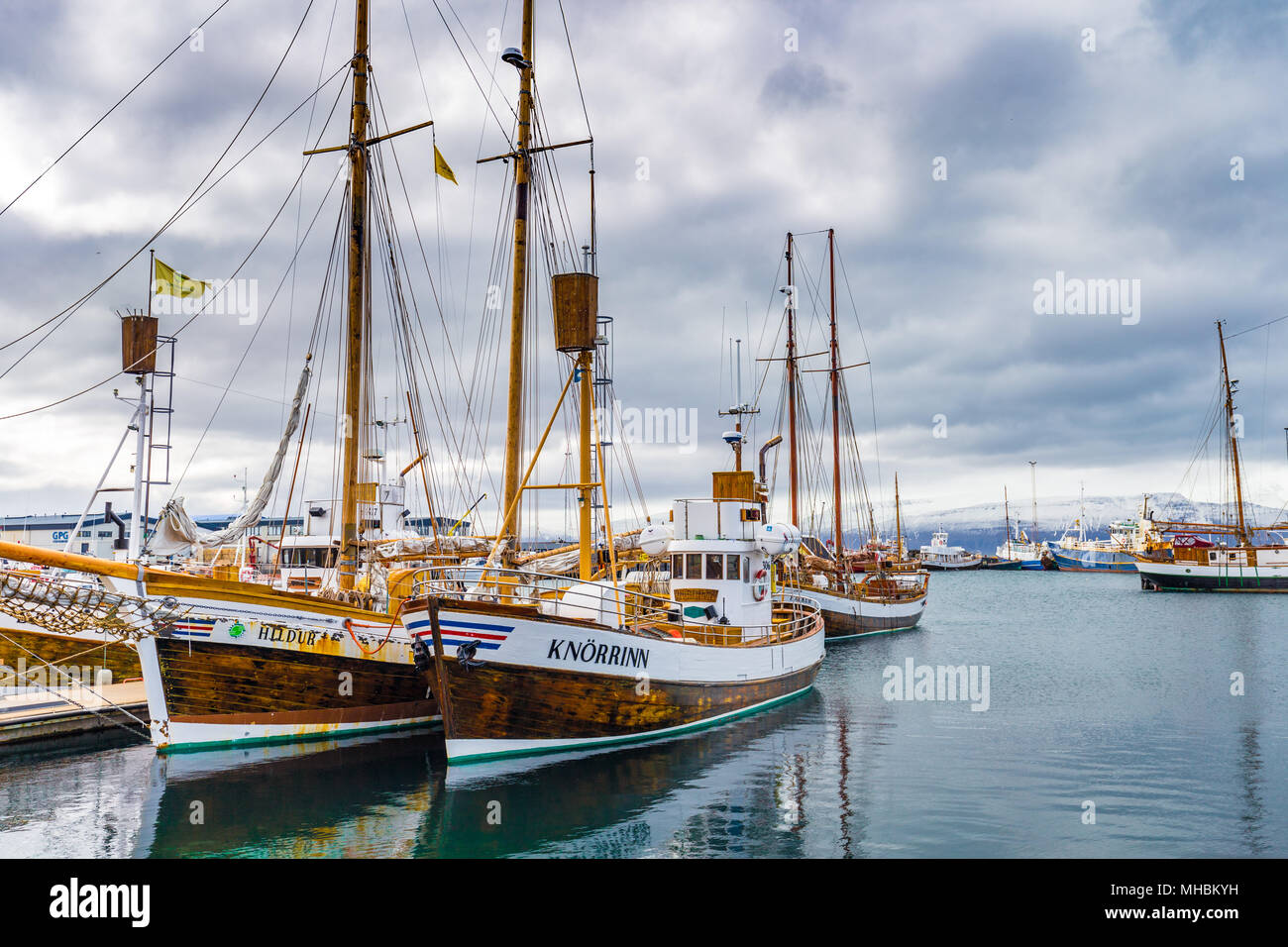
The vibrant docks serve as the departure point for your husavik whale watching rib boat adventure. Capture the colorful wooden ticket offices, traditional oak vessels, and modern black speedboats reflecting in the calm waters of the harbor. Focus on the contrasting colors of the wooden buildings against the dark sea.
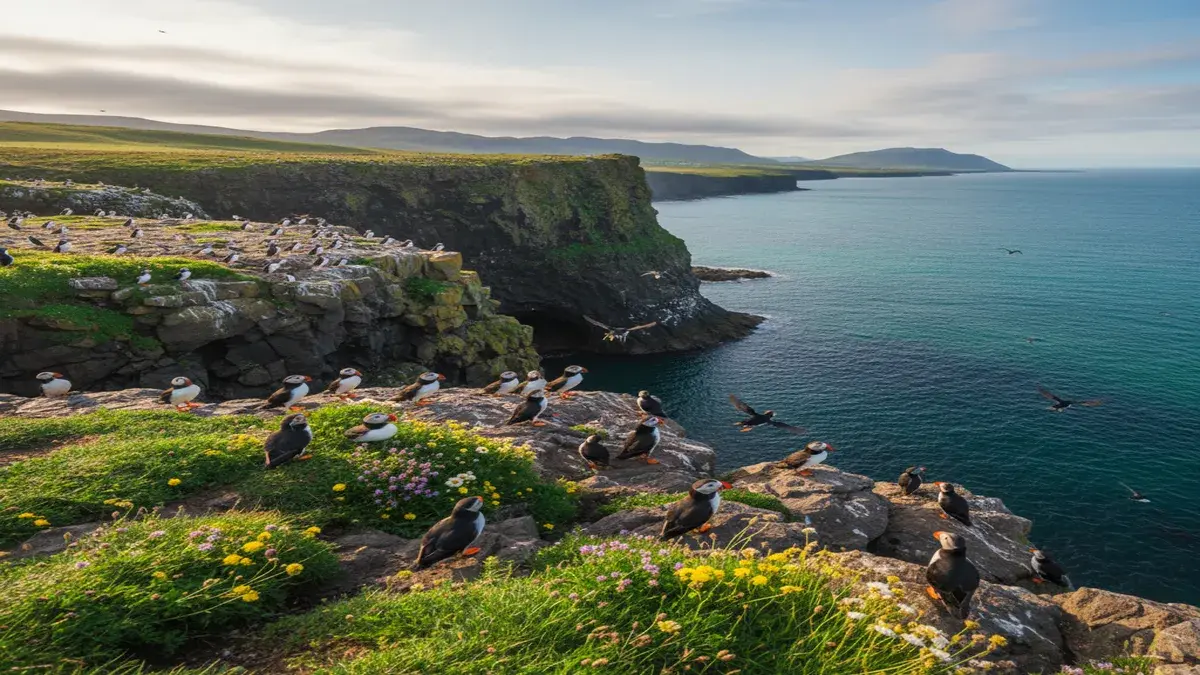
During the summer nesting season, this rocky island is home to thousands of colorful puffins. The speed of the vessel allows quick access, letting you get close to the low cliffs where the birds gather. Use a fast shutter speed to freeze the puffins as they fly to and from the grassy slopes.
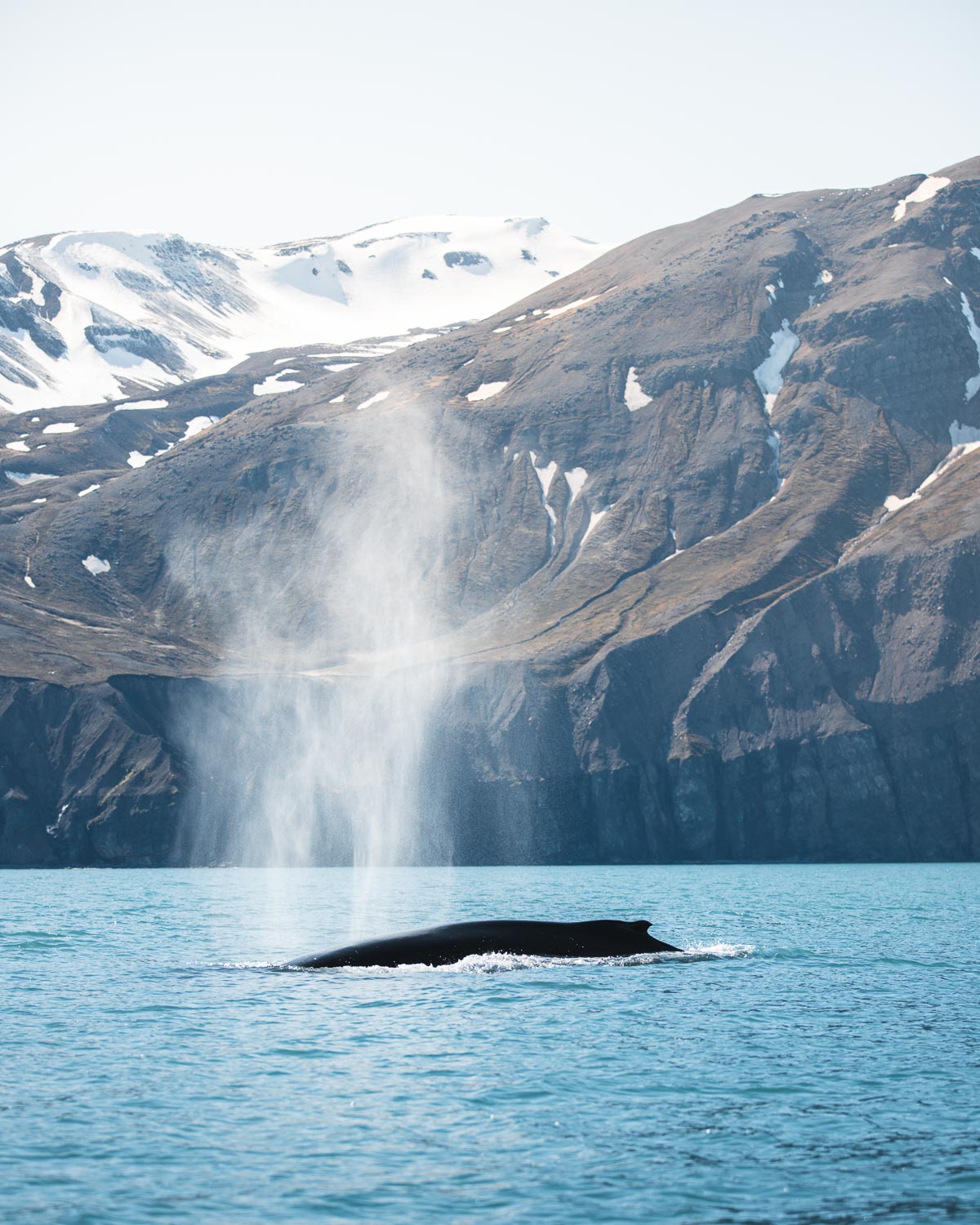
This is where you can photograph humpback whales breaching or showing their flukes. Frame the massive marine mammals with the snow-dusted Kinnarfjöll mountains in the far background. Booking husavik whale watching rib boat tours gives you a low-angle perspective right at water level.
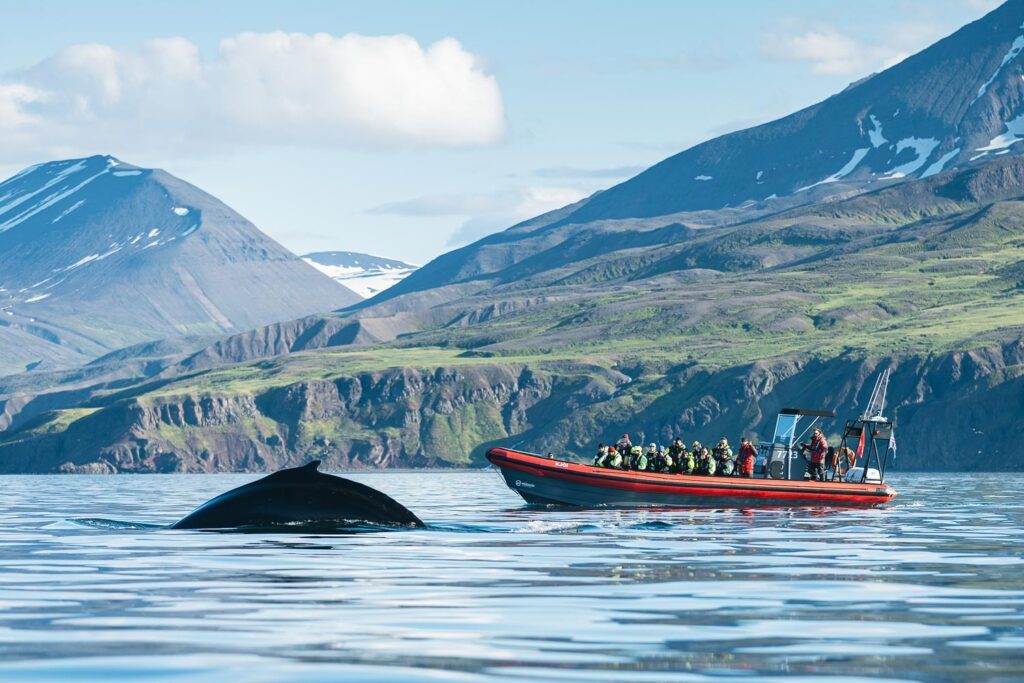
As the boat speeds across the bay, the dramatic snow-capped peaks of the Kinnarfjöll range rise from the opposite shore. Capture the dramatic contrast between the deep blue ocean water and the dark volcanic rock formations. The high speed of the RIB boat creates dynamic sea spray patterns in the foreground.
Embarking on a husavik whale watching rib boat offers a fast, close-up encounter with marine life in Skjálfandi Bay. This high-speed excursion is best suited for older kids, as the bouncy ride requires riders to hold on tightly.
Children must be at least 8 years old and 130 cm tall to join a husavik whale watching rib boat tour. These safety rules ensure everyone can safely straddle the jockey seats during high-speed transits.
Due to the bumpy motion, these husavik whale watching rib boat tours are not allowed for pregnant women or individuals with back or neck issues. If your family has younger kids, a Husavik RIB speed boat safari is not suitable, and a traditional oak boat is a much gentler alternative.
Operators provide mandatory safety gear, including insulated thermal suits and a life jacket for every passenger. These suits fit over regular clothing, keeping kids warm against the freezing arctic sea spray.
It is highly recommended to secure your husavik whale watching rib boat tickets online before arriving at the harbor. Make sure to arrive at the Garðarsbraut ticket office 20 minutes early for gear fitting and safety briefings.
Operators may modify schedules or skip Puffin Island if sea conditions are too rough. If humpback whales are not spotted, most operators offer a free ticket for a traditional boat ride.
Húsavík's lively harbor area is lined with excellent dining options perfect for a meal before or after your husavik whale watching rib boat tours. Visitors can enjoy fresh catches from Skjálfandi Bay just steps from where these speedboats dock for wildlife excursions in Husavik.
Located directly on the waterfront, this rustic log restaurant serves fresh cod and local dishes. It is a popular spot to relax after a husavik whale watching rib boat tour. Sit on the outdoor terrace to watch the vessels sail in.
Housed in a historic 1883 building, this venue is ideal for those who bought husavik whale watching rib boat tickets and need a quick, hearty meal. They serve pizza, fresh local fish, and steaks in a cozy setting.
This family-run eatery is famous for its signature fish soup and traditional Icelandic mashed fish. It is located just a short walk from the husavik whale watching rib boat departure point. Booking ahead is highly recommended during the busy summer months.
Everything you need to know for your journey
The departure location is at the Husavik harbor, with check-in at the ticket office on Garðarsbraut. You will board the Husavik Whale Watching RIB Boat from the nearby piers.
Cancellations made at least 24 hours prior to departure receive a full refund. No refunds are provided for late cancellations or no-shows.
Yes, children must be at least 8 years old and a minimum of 130 centimeters tall to participate in this tour.
No, due to the fast pace and bumps from waves, the trip is not recommended for pregnant women or individuals with back problems.
The ticket office on Garðarsbraut is open from 08:00 to 21:00 daily during the operating season, allowing you to check in or ask questions.
The Husavik Whale Watching RIB Boat is much faster, allowing it to cover larger distances and get closer to marine life, whereas oak boats offer a slower, more traditional cruise.
Yes, puffin sightings at Lundey are included from April 15th to August 15th, which is the official nesting season.
You should wear multiple warm layers, including a fleece or thermal undergarment, sturdy shoes, a beanie, and gloves. You will be provided with warm safety overalls and a life jacket before boarding.
There are no restroom facilities on the Husavik Whale Watching RIB Boat itself, so guests are encouraged to use the public toilets at the harbor before departure.
No, space on board is extremely limited. You must store large backpacks and luggage at the ticket center before boarding the vessel.
A local museum featuring detailed exhibits about whale biology, including a full blue whale skeleton.
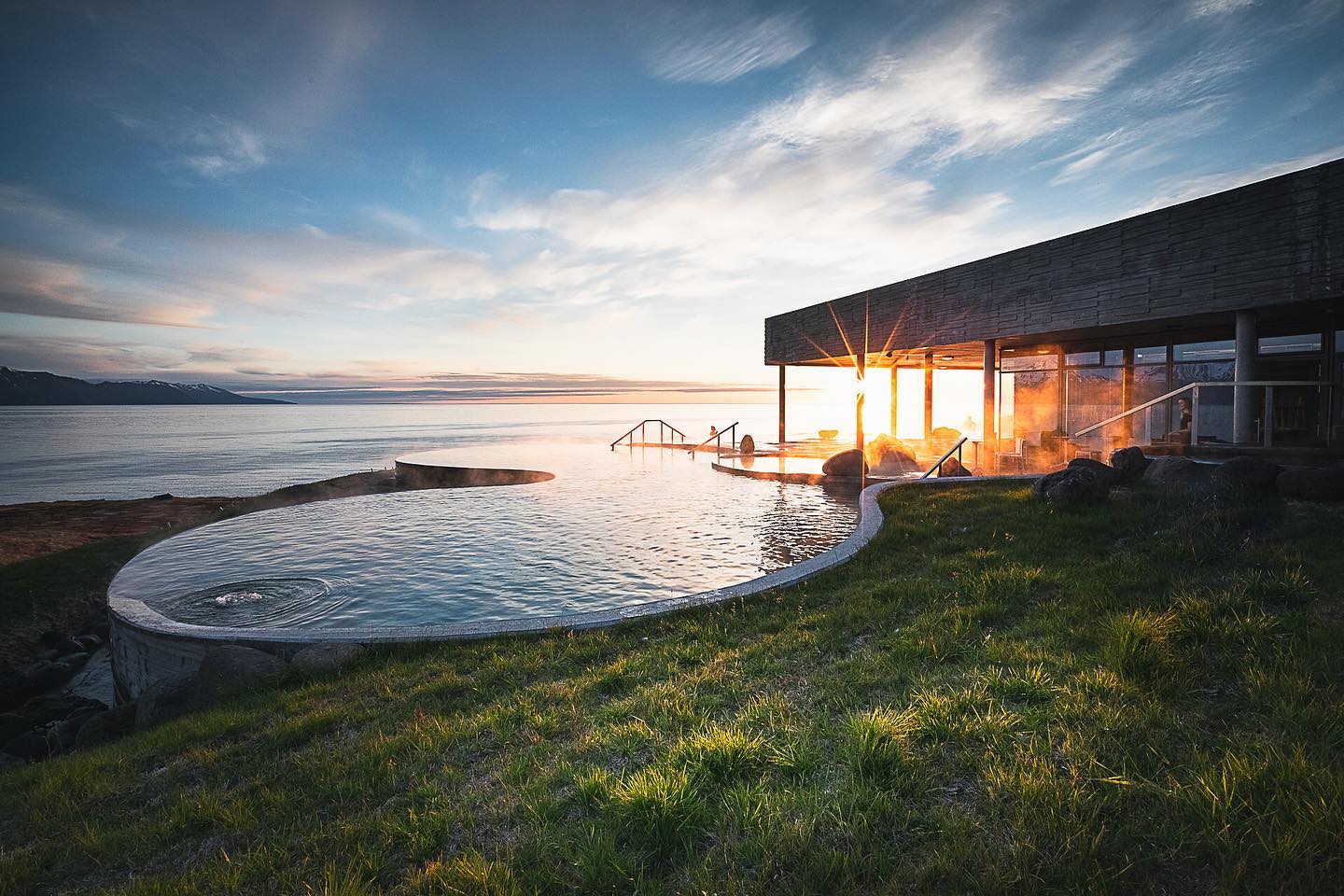
A geothermal bathing facility located on a cliffside, offering mineral-rich waters and panoramic views of the bay.
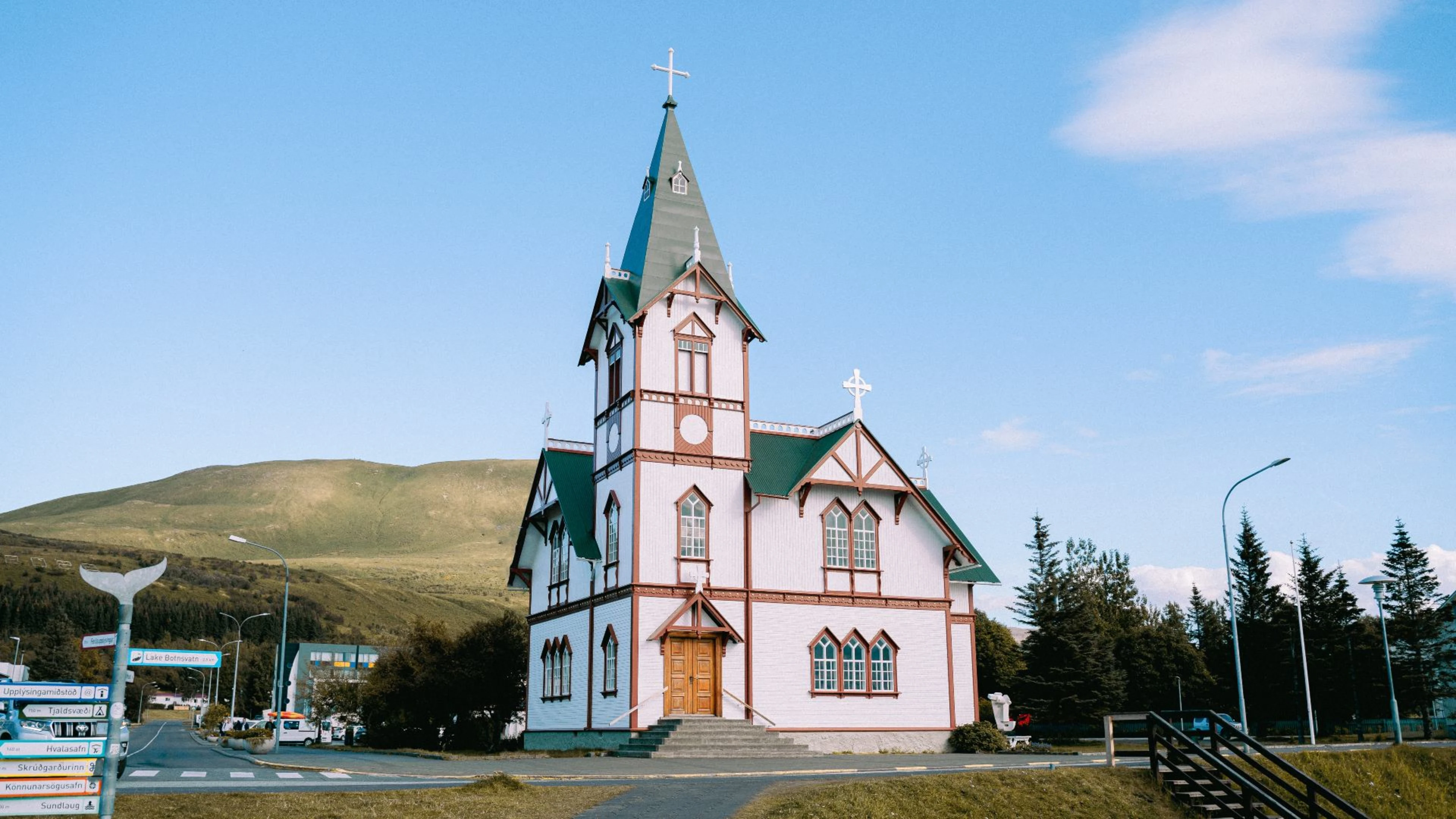
A wooden church built in 1907, known for its distinctive Swiss chalet style and red-green roof.
The historic harbor area lined with colorful wooden houses, serving as the departure point for all sea excursions.
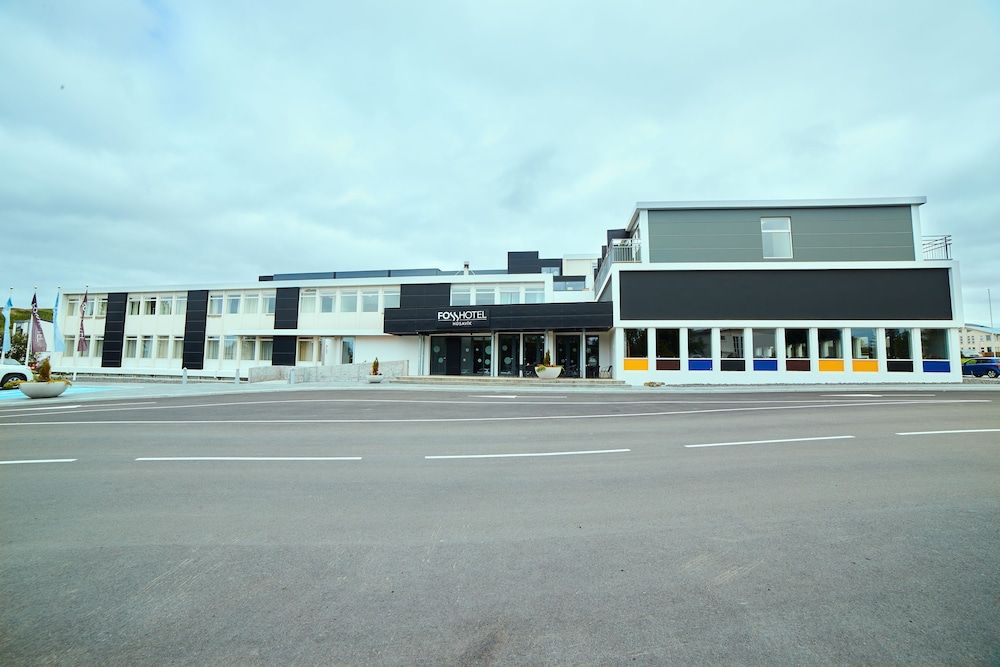
A modern hotel offering comfortable rooms, an on-site restaurant, and proximity to the harbor departures.
Located on a hill overlooking the town, offering scenic views and quiet surroundings.
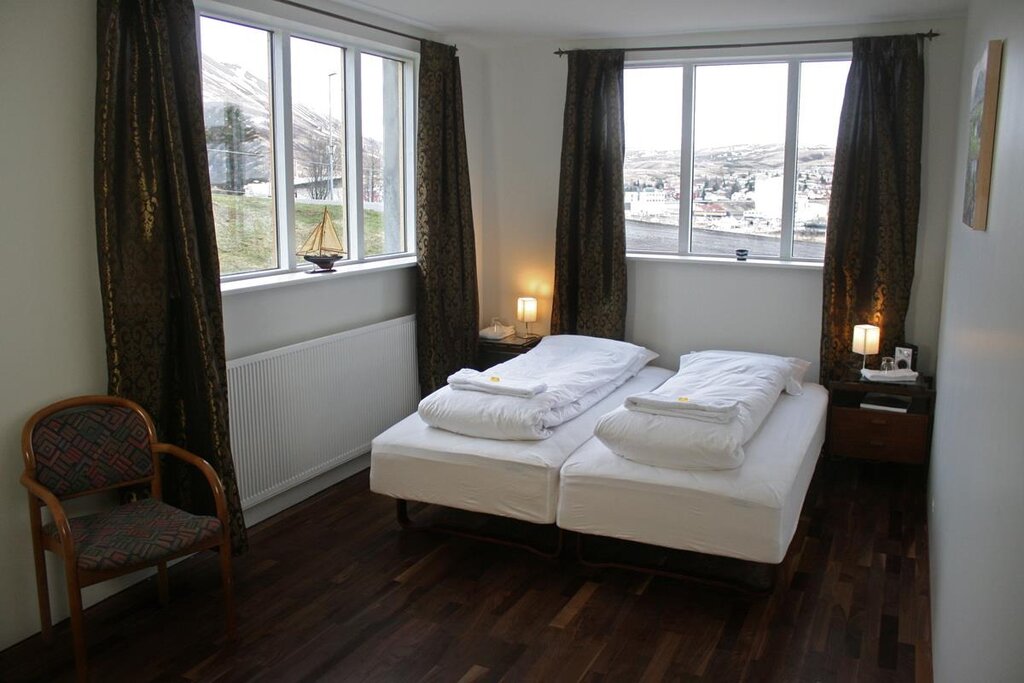
A cozy guesthouse located in the heart of the town, featuring modern amenities and breakfast options.
Join thousands of happy travelers who have discovered this incredible experience
Book Your Experience Now