


Quick answer
The Húsavík whale watching season runs from roughly April through October, with the highest activity in June, July and August. Sightings of humpbacks and minke whales are most consistent through the long-daylight summer weeks. The harbor at Hafnarstétt keeps free public access daily from 08:00 to 21:00, and calmer seas favour a morning departure between 09:00 and 16:00.
Skjálfandi Bay ranks among the most reliable whale-watching grounds in the North Atlantic, and Húsavík sits at its edge like a front-row seat. The town's harbor at Hafnarstétt has sent oak-hulled schooners past the same feeding grounds for decades. For many travellers, that bay is the whole reason to drive the long road across northern Iceland. The husavik whale watching season shapes almost everything about a visit here, from when the boats leave to how many species pass through the bay. The harbor itself charges no entry fee, and the waterfront stays open from 08:00 to 21:00 every day, which gives visitors a wide window to walk the piers, read the departure boards, and watch crews prepare. Operators such as North Sailing run their schedules around daylight and sea state rather than a fixed calendar. Understanding the rhythm of a Húsavík whale watching tour means understanding the water: humpbacks, minke whales, and the occasional blue whale follow the plankton and herring that gather in Skjálfandi Bay. Most captains and locals point to the same practical detail. Calmer morning seas and cleaner light make the 09:00 to 16:00 arrival window the steadiest bet, whatever the month. Booking ahead matters more than it looks, because sailings fill quickly once the midnight sun draws crowds north. Anyone with questions can call the operator at +354 464 7272 before making the trip north. The address to aim for is Hafnarstétt, 640 Húsavík, and the departure point sits a short walk from the town center. Weather remains the one variable no schedule can tame; a bright, flat morning can turn to swell by afternoon. Anyone planning around the husavik whale watching season should treat the printed timetable as a starting point and confirm departures directly with the operator before travelling. That single habit prevents most of the disappointment that catches first-time visitors to this stretch of the Icelandic coast.
“Treat the printed timetable as a starting point and confirm departures with the operator before travelling.”
When is the Husavik Whale Watching Season?
The best window to visit is June to August for high sighting rates, though the full season runs from March to November. Late spring brings the migration of blue whales, while peak summer offers consistent humpback sightings and stable water conditions.
Late Spring (May)
Moderate passenger numbersCool, average high of 10°C (50°F)
This period marks the start of regular sightings and the arrival of migrating blue whales. Puffins also begin nesting on nearby islands.
Summer Peak (June–August)
High visitor traffic dailyMild, average highs 11°C to 13°C (52°F to 55°F)
Sighting rates for humpback and minke whales reach their highest levels. Long daylight hours allow for frequent departures.
Autumn (September–November)
Lower visitor numbersBrisk, average highs drop below 8°C (46°F)
Humpbacks remain in the bay, though weather conditions become more unpredictable as winter approaches. Tours decrease in frequency toward November.
Morning departures (09:00–16:00)
Busiest boarding times—
Booking within this daily window provides calmer morning seas and optimal daylight for spotters. Sighting success remains steady throughout these hours.
Verdict: For optimal sighting conditions, book a morning departure between 09:00 and 16:00 during the peak summer months of July and August.
RIB Speedboats vs. Traditional Oak Boats in the Husavik Whale Watching Season
Visitors booking a tour during the Husavik whale watching season face a choice between classic wooden oak vessels and fast rigid inflatable boats (RIBs). This decision determines your travel speed, physical comfort, and proximity to the marine life.
|
Top pick Traditional Oak Boats Classic wooden vessels for stable cruising |
RIB Speedboats High-speed rigid inflatable boats | |
|---|---|---|
| Closeness to water | Elevated deck viewing, approximately 2 to 3 meters above the surface. | Low-profile seating, approximately 0.5 to 1 meter above the surface. |
| Group size | Capacity ranges from 45 to 70 passengers per boat. | Strictly limited to 12 passengers per boat. |
| Speed | Cruising speed of 9 to 11 knots. | Cruising speed of 32 knots with a max speed of 52 knots. |
| Comfort | High stability with walk-around decks and a sheltered indoor cabin. | Bumpy, high-impact ride with saddle seats and no indoor shelter. |
| Suitability for families | Open to all ages with no height or medical restrictions. | Restricted to ages 8 and older, minimum height of 130 cm, and no pregnant women. |
| Typical duration | 3 to 3.5 hours per tour. | Approximately 2 hours per tour. |
Verdict: Choose traditional oak boats for a relaxed, family-friendly trip with indoor shelter, or select a RIB speedboat if you prefer a fast, small-group ride that gets close to the water.
Crucial Facts About the Husavik Whale Watching Season
Skjálfandi Bay provides a rich habitat for marine mammals due to its unique ocean currents and river runoff. This nutrient wealth attracts diverse whale species, making it a critical feeding ground in the North Atlantic.
10 whale species visit the bay
Skjálfandi Bay regularly hosts over 10 distinct species of cetaceans during the feeding months. Visitors frequently spot humpbacks, minkes, white-beaked dolphins, and occasionally fin or blue whales.
2 major rivers supply key nutrients
The bay's food chain relies on nutrients carried by two large rivers, including a glacial river sourced from the Vatnajökull glacier. This runoff mixes with ocean currents to spark massive phytoplankton blooms that support the local food web.
97 percent of tours spot whales
Records kept since 1995 show an average sighting success rate of 97 percent across all departures. This high frequency has established Húsavík as the whale capital of Iceland.
309 individual humpbacks identified since 2001
Researchers have cataloged 309 unique humpback whales in Skjálfandi Bay using photo identification. Many of these individuals return to different feeding grounds around Iceland rather than staying in a single location.
30-meter blue whales enter the bay
The blue whale, which can reach lengths of up to 30 meters, is the largest animal ever known to have lived. These giants enter the bay to feed on dense patches of krill in the spring and early summer.
6 months of fasting follow feeding
Migratory baleen whales feed heavily in the nutrient-dense waters of Skjálfandi Bay to build up energy reserves. During their winter migration to breeding grounds in the south, they can survive up to six months without eating.
20-micrometer nets capture the food base
Marine biologists from the Húsavík Research Center use fine 20-micrometer mesh nets to collect phytoplankton samples in the bay. These microscopic algae form the foundation of the marine ecosystem that sustains the larger whale species.
2 small cetacean species resident here
White-beaked dolphins and harbour porpoises are the two resident small cetacean species commonly seen here. They feed on small schooling fish and are active year-round.
Common Mistakes to Avoid During the Husavik Whale Watching Season
A few avoidable errors can shorten a Húsavík whale watching trip before it begins. Knowing them keeps your visit to the Hafnarstétt harbor on track.
Waiting until arrival to book a July slot
Peak-season July departures fill fast. Reserve your tour through the site's booking pages well ahead rather than hoping for a same-day space.
Dressing for summer air, not open water
Wind and spray make the sea feel far colder than the harbor. Add windproof and thermal layers even on warm afternoons.
Expecting blue whales during an autumn visit
Sightings shift by season and species. Treat any single whale as a possibility, not a guarantee, and check current sighting notes before you go.
Booking a late-afternoon or evening departure
Best arrival window is 09:00–16:00 for calmer morning seas and better light. Plan an earlier slot when you can.
Underestimating how long the outing takes
Tours run several hours plus check-in. Allow a half-day and avoid scheduling tight connections right after.
Turning up at the wrong meeting point
The departure area is Hafnarstétt, 640 Húsavík. Confirm the exact dock and call +354 464 7272 if you cannot locate it.
What to Pack and Prepare for the Husavik Whale Watching Season
Prepare these items in the order shown, from days before your trip through to boarding at Hafnarstétt.
-
Book your tour online in advance — Sailings fill fast in high season, so reserve your operator slot early.
-
Confirm departure time and check-in point — The harbor at Hafnarstétt is free to enter, but boats leave on a fixed schedule.
-
Aim to arrive 09:00–16:00 — Calmer morning seas and better light improve your chances of sightings.
-
Take motion sickness tablets beforehand — Most remedies work best taken 30–60 minutes before you sail.
-
Pack windproof and waterproof outerwear — Open-deck conditions stay cold and wet even on mild days.
-
Wear warm layers and closed shoes — Sea temperatures drop sharply once you leave the harbor.
-
Secure your camera with a strap — Wind and spray make dropped gear a real risk on deck.
-
Bring a printed or phone booking confirmation — Have it ready at check-in to board without delay.
Sights to Pair with the Husavik Whale Watching Season
A whale watching tour in Husavik pairs naturally with several land-based sights located just steps from the harbor. These attractions allow you to learn more about local marine life or relax after spending hours out on the cold waters of Skjálfandi Bay.
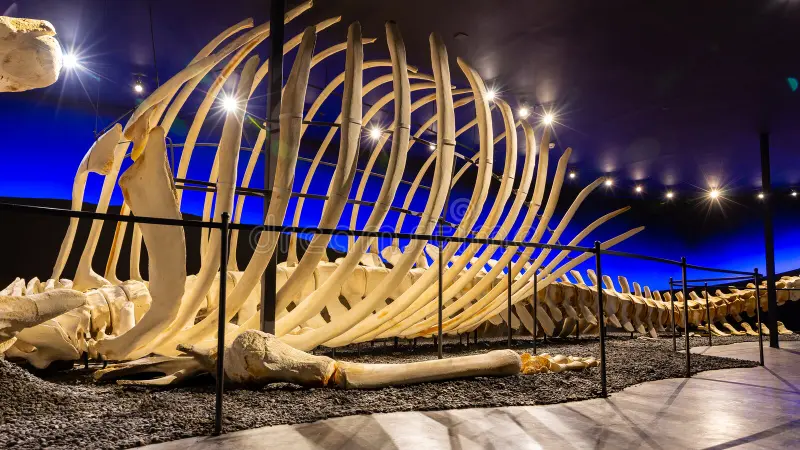
Húsavík Whale Museum
Explore 11 massive whale skeletons, including a rare full-scale blue whale. This non-profit exhibition provides educational context about the marine mammal species found in local waters.
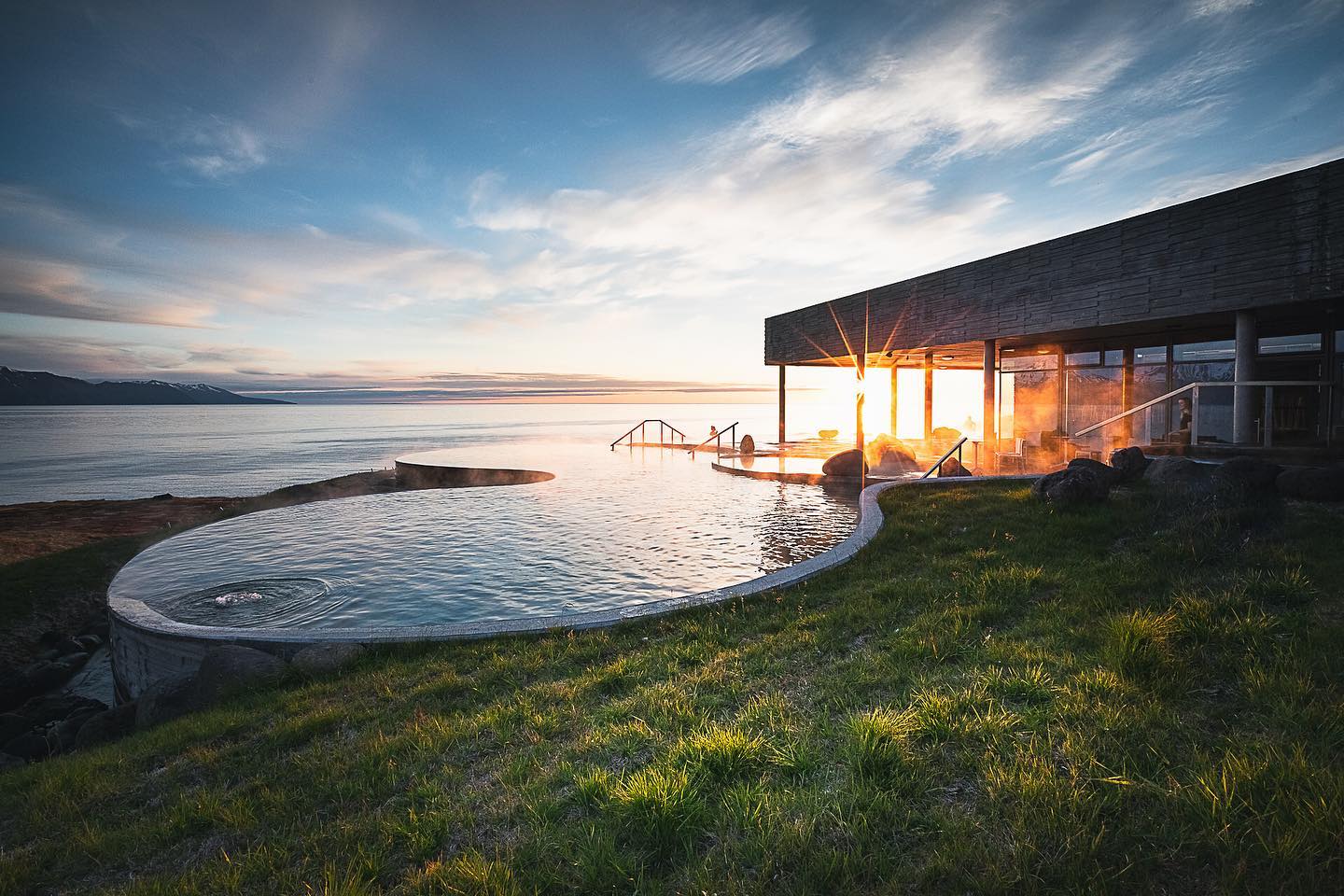
GeoSea Geothermal Sea Baths
Soak in warm, mineral-rich seawater pools built into the sea cliffs. The site offers views of Skjálfandi Bay, providing a warm contrast to a windy day on the water.
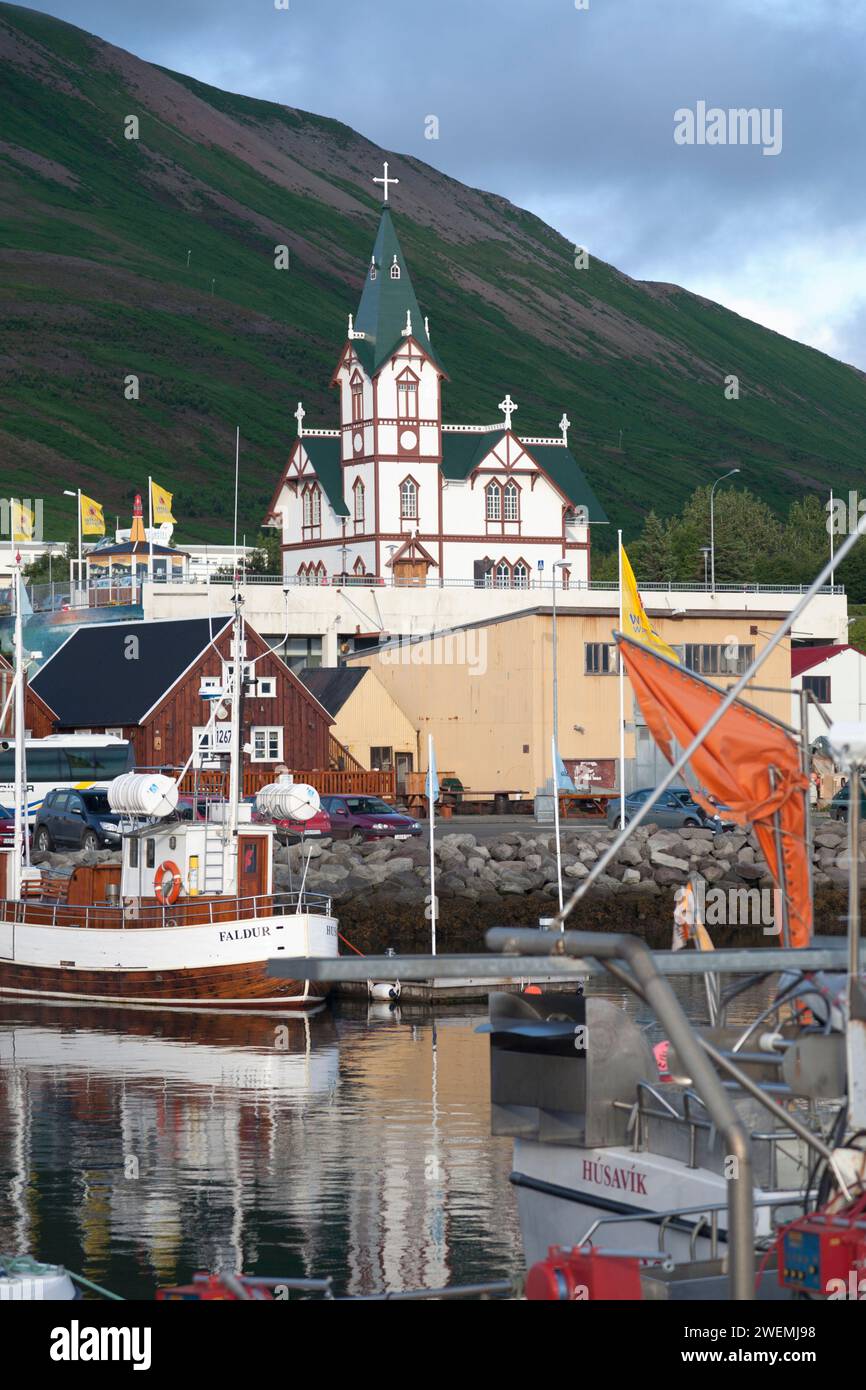
Húsavíkurkirkja
Photograph this distinctive red-and-white wooden church constructed in 1907. Located directly across from the main harbor, it features a Swiss Chalet style design.
Check availability
FAQ on the husavik whale watching season
Everything you need to know about husavik whale watching season